
How Does Backflow Actually Contaminate Drinking Water?
Most people assume water flows in one direction — from the main into the building. Pressure changes everything. When that assumption breaks, whatever is connected to your plumbing system can enter the drinking supply.
THE BASIC PRINCIPLE
Water Pressure Is What Keeps Contamination Out.
Municipal water systems maintain positive pressure — typically 40–80 PSI — throughout the distribution network. That pressure is what pushes water from the main through the meter and into your building. It's also what prevents anything downstream from flowing backward into the public supply.
The system assumes that supply pressure is always higher than the pressure at any connected point inside the building. When that's true, the direction of flow is predictable and safe.
When it isn't, the direction can reverse.
WHAT A CROSS-CONNECTION IS
An Unprotected Link Between Potable and Non-Potable Water.
A cross-connection is any physical point where the potable (drinking) water supply is — or could be — connected to a non-potable source. That source might contain chemicals, biological agents, stagnant water, or industrial fluids.
Cross-connections aren't defects. Most are intentional: irrigation lines, boiler feeds, fire suppression systems, lab equipment, and commercial kitchen pre-rinse stations are all legitimate connections that require protection.
The protection requirement is what California law mandates — and what the annual testing program verifies.
WHERE IT CAN HAPPEN IN YOUR BUILDING
Most Commercial Properties Have Multiple Cross-Connection Points.
Each connection type carries a different risk level — from low hazard (modest risk of water quality degradation) to high hazard (direct threat to public health). California's hazard classification determines which backflow prevention device is required at each point.
Pre-Rinse Spray Stations
Restaurant pre-rinse sprayers submerged in wastewater during a backsiphonage event can pull contaminated water directly into the supply line. The most frequently cited cross-connection in commercial kitchen health inspections.
Irrigation with Chemical Injection
Fertilizer, herbicide, and pesticide injectors connected to potable irrigation lines create a direct high-hazard cross-connection. Irrigation systems are the most commonly overlooked requirement across office parks and retail centers.
Boilers & Heating Systems
Boilers use corrosion inhibitors and biocides that render the water non-potable. High-pressure pumps in these systems create backpressure conditions that can push treated water backward into the domestic supply line.
Cooling Towers & HVAC
Cooling towers are treated with algaecides, scale inhibitors, and biocidal agents — chemicals not safe for human consumption, selected for metal protection and microbial control. The makeup water connection requires RPZ-level protection.
Fire Suppression Systems
Wet pipe sprinkler systems connected to the domestic supply can contain stagnant water, corrosion byproducts, and system additives. The connection requires a DCDA assembly — tested independently from fire system certification, and frequently missed.
Medical & Lab Equipment
Sterilization units, dialysis machines, and laboratory connections represent the highest hazard classification under California's cross-connection program — subject to CDPH standards and elevated inspection frequency.
WHAT ENTERS THE WATER SUPPLY
Contamination Has No Color. No Taste. No Warning.
Backflow contamination typically does not produce visible changes in the water. It does not smell different. Most people who drink contaminated water after a backflow event have no way of knowing it happened. Symptoms — if they appear — usually resemble gastroenteritis or food poisoning, and the connection to a backflow event is rarely made.
Category 01
Agricultural & Landscape Chemicals
Fertilizers containing nitrates, nitrogen, and phosphorus. Herbicides, fungicides, and pesticides injected through irrigation lines. The EPA's maximum contaminant level for nitrates in drinking water is 10 mg/L — agricultural injection systems routinely operate at concentrations well above that threshold.
Category 02
Industrial Treatment Chemicals
Boiler systems and cooling towers are treated with corrosion inhibitors, scale preventers, and biocidal agents — including molybdates, chromates, and quaternary ammonium compounds. These are industrial-grade chemicals selected for metal protection and microbial control, not safety for human consumption.
Category 03
Microbial Contamination
Fire sprinkler systems and other stagnant water connections can harbor Legionella, Pseudomonas, and other opportunistic pathogens. Stagnant water at warm temperatures creates ideal growth conditions. During a backsiphonage event, biofilm and settled biological material can enter the supply line.
Category 04
Sewage & Wastewater
Sewage backflow — from submerged hose connections, drain cross-connections, or non-air-gapped equipment — introduces pathogens including E. coli, Salmonella, hepatitis A, and Cryptosporidium. This is the highest hazard category and requires air-gap or RPZ-level protection at the connection point.
THE DETECTION PROBLEM
You can't tell.
Backflow contamination is rarely detected at the point of consumption. The water looks, smells, and tastes normal. By the time symptoms appear — if they do — the event is over, the water has moved through the distribution system, and tracing the source requires a cross-connection investigation that most property owners don't know to request. Annual device testing is the only proactive line of defense.
HOW PREVENTION ACTUALLY WORKS
The Devices Don't Treat Contamination. They Block the Path.
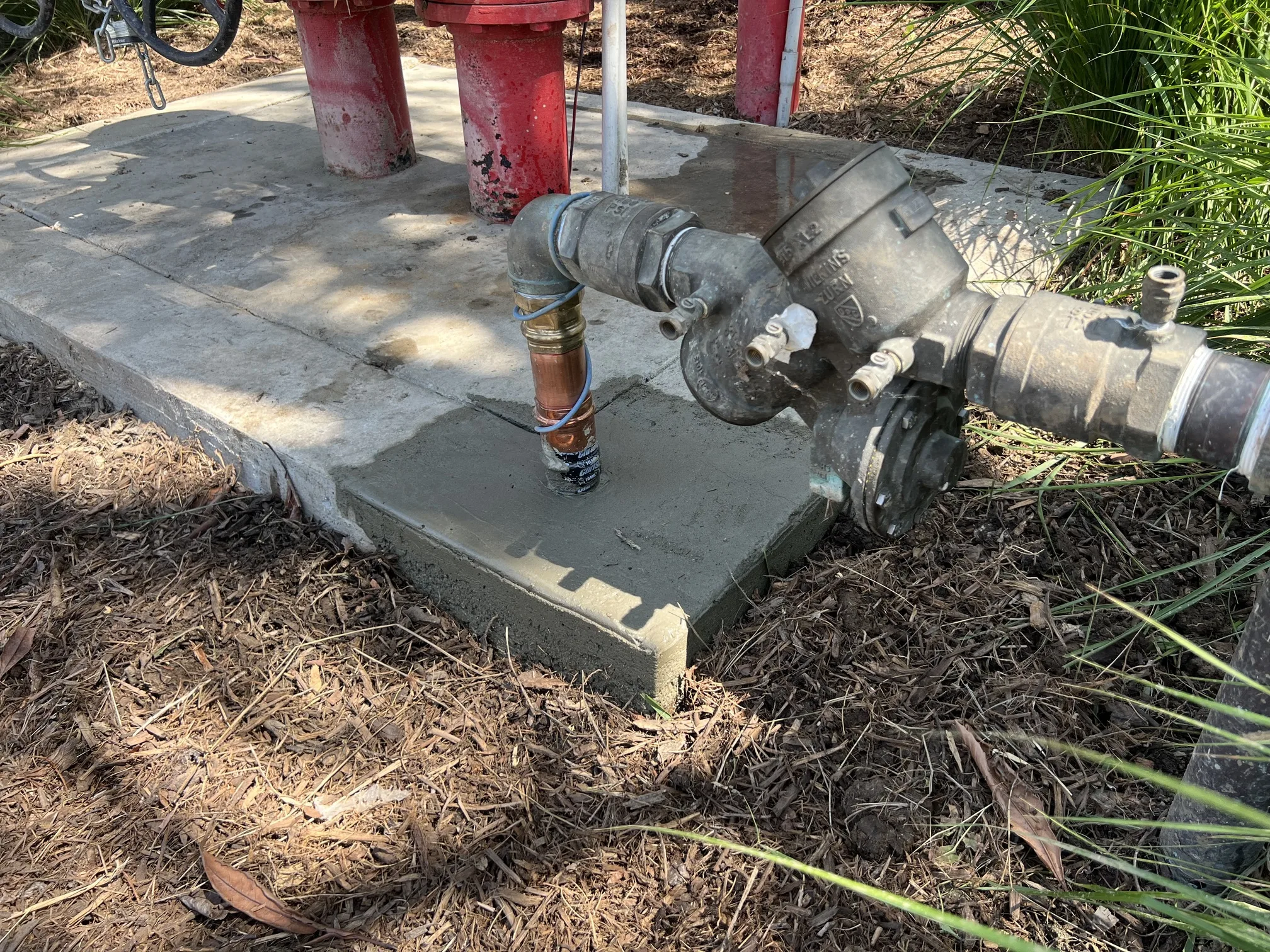
Backflow prevention assemblies make reverse flow mechanically impossible — or relieve pressure before it can drive water backward. The device required depends on the hazard level of the cross-connection. California's Title 17 specifies which device applies where. All assemblies must be tested annually by a certified tester and the results filed with the local water agency.
RPZ
Reduced Pressure Zone Assembly
High HazardThe highest level of mechanical protection. Two independent check valves with a differential pressure relief valve between them. If downstream pressure approaches within 2 PSI of inlet pressure — a condition that would allow reverse flow — the relief valve opens to atmosphere and discharges, preventing contamination from entering the supply under any condition.
Stops: Both backsiphonage and backpressure. Required for irrigation with chemical injection, boilers, cooling towers, medical/lab, and most industrial connections.
DCV
Double Check Valve Assembly
Low – Moderate HazardTwo independently operating spring-loaded check valves in series. Each requires positive forward pressure to open; a reversal in pressure causes both to close, blocking reverse flow. Unlike the RPZ, there is no relief valve — making it unsuitable for high-hazard connections where contamination could overwhelm a single check valve failure.
Stops: Both backsiphonage and backpressure at low-to-moderate hazard levels. Common in office buildings, light commercial boilers, and domestic connections.
DCDA
Double Check Detector Assembly
Fire SuppressionA DCV assembly with a small bypass line and a detection meter. The bypass meter measures very low flow rates — allowing the water agency to identify unauthorized tapping of the fire service connection, or small leaks within the sprinkler system, that wouldn't register on the main meter. The DCV portion provides backflow protection at the domestic supply connection.
Stops: Backflow from wet fire sprinkler systems into the domestic supply. Tested annually, independently of fire system certification.
An air gap — a physical break between the outlet of a supply line and the flood level rim of a receiving vessel — provides absolute protection with no mechanical components to fail or maintain. Required in the highest-hazard applications, including surgery centers and dialysis facilities.
ANNUAL BACKFLOW TESTING — SOUTHERN CALIFORNIA
Know Your Assemblies Are Holding. Get Tested This Year.
California Coast Plumbers provides certified on-site backflow testing for commercial properties across Orange County, Los Angeles County, and Riverside County. We test every assembly on your property, file with your water agency the same day, and deliver the compliance certificate. C-36 Licensed — Lic. #736992.
California cross-connection control program certified. Every device tested to agency standards and fully documented.
Reports filed with IRWD, MWDOC, LADWP, RCWD, or WMWD before end of business the day of your test.
We carry common replacement components. Most failed assemblies are retested before we leave the property.
We track deadlines, coordinate scheduling, and handle agency filings across every property in your portfolio.