
What Your Water Bill Is Trying to Tell You.
Your water bill is diagnostic data most property managers never read. A sudden spike, a steady creep, or a seasonal number that doesn't match the season — each pattern points to a specific plumbing problem, and each one gets more expensive every billing cycle you ignore it.
THE BASELINE PROBLEM
Most Property Managers Don't Know What "Normal" Looks Like.
A water bill arrives. You glance at the total. You pay it. That's how most commercial properties handle water — and it's the reason hidden leaks run for months before anyone notices.
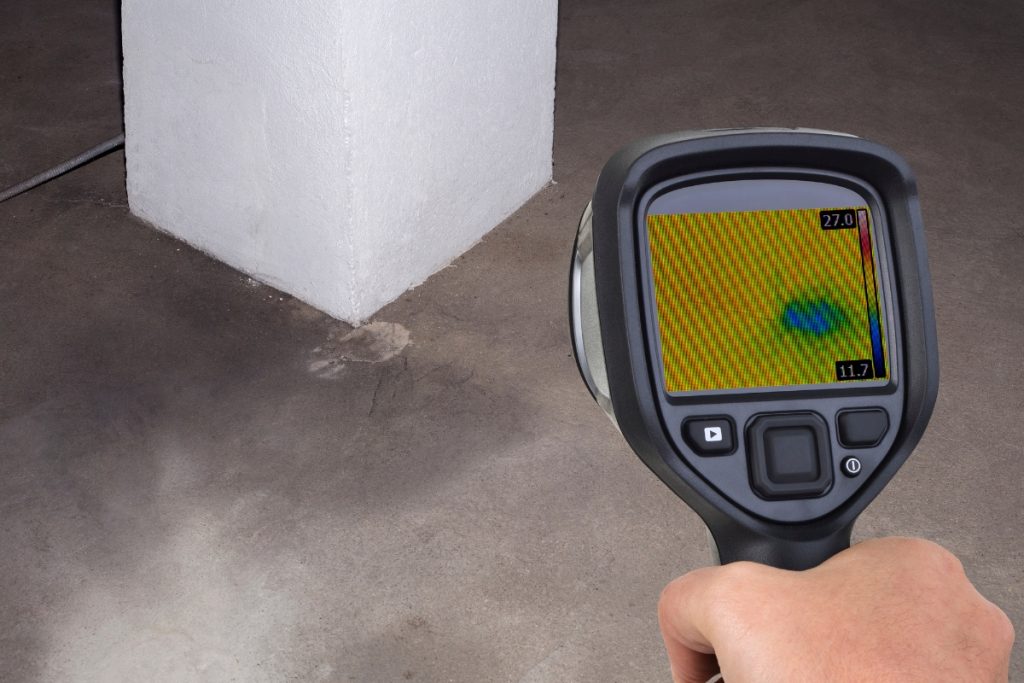
The bill tells you how much water moved through the meter. The question is whether you know how much should have.
Water usage in a commercial building is surprisingly predictable. A 20-unit office building with 80 occupants, standard restrooms, and no irrigation uses roughly the same amount month after month. A restaurant with consistent covers uses roughly the same amount season after season.
When the number moves — and the building hasn't — something is leaking, running, or dripping that shouldn't be. The bill doesn't tell you what. But it does tell you when the problem started and how fast it's getting worse.
Office
Per Occupant / Month
~750–1,000 gallons. Restrooms, break rooms, HVAC makeup. Very stable month to month. A 15% jump almost always indicates a fixture problem.
Restaurant
Per Seat / Month
~1,800–2,500 gallons. Dishwashing, prep, grease trap dilution, restrooms. Varies with covers but follows a tight ratio. Deviation means equipment or supply line issue.
Retail
Per 1,000 SF / Month
~400–600 gallons. Restrooms and HVAC only. Lowest usage profile of any commercial type. Any meaningful increase is almost certainly a leak, not usage.
Medical
Per Operatory / Month
~1,200–1,800 gallons. Sterilization, handwashing stations, specialty equipment. Highly consistent. Unexpected spikes often trace to stuck fill valves or autoclave supply leaks.
Ranges based on AWWA commercial water use benchmarks and California Coast Plumbers' field observations across 62,000+ commercial service calls since 1997. Actual usage varies by occupancy, equipment, and building configuration.
THE COST MOST PROPERTY MANAGERS MISS
You're Paying Sewer Charges on Water That Never Reached the Sewer.
In most Southern California water districts, sewer charges are calculated as a percentage of your metered water consumption — typically 80–100% of the water volume. The district doesn't know whether that water went down a drain or leaked into a wall cavity. It bills sewer on every gallon that passed through the meter.
That means a hidden leak doesn't just waste water. You're paying the full sewer surcharge on water that never entered the sewer system. A $300/month water leak is actually costing you $500–$600/month once the sewer calculation is included. Over three billing cycles, that's $1,500–$1,800 in combined charges — for a problem a $12 flapper valve would have fixed.
What You Think You're Paying
$300/mo
Excess water usage $300
Sewer surcharge $0 (assumed)
Perceived monthly cost $300
What You're Actually Paying
$540–$600/mo
Excess water usage $300
Sewer surcharge (80–100% of water) $240–$300
Actual monthly cost $540–$600
Sewer surcharge rates vary by district. Most Orange County, LA County, and Inland Empire districts calculate sewer based on winter-quarter water consumption or a percentage of total metered usage. Contact your water district for your specific sewer calculation method.
FIVE PATTERNS YOUR BILL REVEALS
Five Billing Patterns. Five Different Problems.
Every anomaly in a water bill has a shape. The shape tells you what category of problem you're looking at — and how urgently you need to find it.
01
The Sudden Spike
Urgent02
The Gradual Creep
Warning03
The Seasonal Mismatch
Diagnostic04
The Ghost Usage
Investigation05
The Incomplete Reset
Follow-Up01
The Sudden Spike
Urgent — Investigate ImmediatelyUsage doubles or triples in a single billing cycle with no change in occupancy or operations. This is the signature of a new, active leak — a burst supply line, a failed pressure regulator, or a stuck-open valve. The higher the spike, the larger the breach.
Most likely causes: Supply line failure, pressure regulator failure, irrigation valve stuck open, water heater T&P valve continuously discharging.
02
The Gradual Creep
Warning — Track and InvestigateUsage rises 10–20% over three to four billing cycles. Not dramatic enough to trigger alarm on any single bill, but obvious when you compare this quarter to last year's same quarter. This is the profile of a slow, worsening leak — a toilet flapper degrading, a fitting that's seeping more as corrosion widens the gap, or a slab leak that's been growing for months.
Most likely causes: Degrading toilet components, corroding pipe fittings, slow slab leak, water softener stuck in regeneration cycle.
03
The Seasonal Mismatch
Diagnostic — Compare Year-Over-YearSummer bill is normal, but winter bill doesn't drop the way it should. Or the reverse — winter bill drops, but not as far as the same month last year. When usage doesn't follow the seasonal pattern your building type predicts, something is consuming water independently of occupancy and weather. Irrigation is the most common culprit.
Most likely causes: Irrigation running on a timer that was never adjusted for season, broken sprinkler heads, cooling tower bleed-off not shutting down for winter.
04
The Ghost Usage
Investigation — Check Off-Hours ConsumptionIf your water district provides interval data, check whether the meter is recording usage during hours the building is unoccupied. Irvine Ranch Water District, City of Anaheim Public Utilities, Municipal Water District of Orange County (MWDOC WaterSmart), and most LA County municipal providers now offer online portals with hourly consumption resolution. Water flowing at 2 AM in a building that closes at 6 PM is a leak. There's no other explanation. The volume tells you how big.
Most likely causes: Running toilet in an unmonitored restroom, HVAC makeup water cycling, landscape irrigation running overnight, water heater leak.
05
The Post-Repair Reset That Doesn't Reset
Follow-Up — Confirm Repair EfficacyYou had a leak repaired. The next bill arrives. Usage didn't drop back to baseline. Either the repair didn't fully resolve the issue, or there's a second source of waste that the original repair masked. This pattern is more common than most property managers expect — multiple small leaks presenting as one large anomaly.
Most likely causes: Incomplete repair, second concurrent leak, irrigation issue separate from building plumbing, meter reading error (request a re-read).
WHAT WE TYPICALLY FIND
A Running Toilet in a Second-Floor Restroom. Four Billing Cycles.
A 12-unit office building in Orange County called us after noticing a gradual creep in their water bill — the classic Pattern #2. The bill had risen about 18% over four months, but no tenant reported a leak and no water was visible anywhere in the building.
We found a single toilet on the second floor with a degraded flapper valve. It was running continuously — silently refilling the tank every few minutes, 24 hours a day. No overflow. No sound from the hallway. Just a rubber flap that had warped enough to break the seal.
The flapper cost $12. The installation took 20 minutes. The four billing cycles of excess water and sewer surcharges had cost the property approximately $2,200 — for a part that any maintenance tech could have replaced during a routine walkthrough.
$12
Part Cost
20 min
Repair Time
~24,000 gal
Water Wasted
~$2,200
Excess Charges (incl. sewer)
WHERE THE WATER ACTUALLY GOES
Six Sources of Water Usage in a Commercial Building. Most Managers Only Think About Two.
Restrooms and kitchens are the obvious consumers. But in most commercial buildings, they're not even the largest ones. Irrigation, cooling systems, and water heaters often account for more total volume — and they're the sources most likely to develop undetected waste.
30–40%
Irrigation & Landscape
The single largest water consumer at most commercial properties with landscaping. Timer-controlled, rarely audited, and the first place to look when a bill jumps. A single broken head can waste 10+ gallons per minute during run cycles.
20–30%
Restrooms & Fixtures
Toilets, urinals, faucets. Predictable at a per-occupant rate. When restroom usage deviates from headcount, the culprit is almost always a running toilet or a faucet that won't fully close.
10–20%
HVAC & Cooling Towers
Evaporative cooling and makeup water for HVAC systems. Runs continuously during cooling season. A stuck bleed-off valve or miscalibrated conductivity sensor wastes thousands of gallons per month.
10–15%
Kitchen & Food Service
Dishwashers, prep sinks, grease trap dilution. Tracks tightly with meal volume. If the kitchen bill component rises without more covers, suspect a pre-rinse spray valve, ice machine, or dishwasher fill issue.
5–10%
Water Heaters
Domestic hot water systems, recirculation loops. Consistent baseline that shouldn't move. A T&P valve discharging continuously or a recirculation pump cycling abnormally shows up here.
5–10%
Process & Specialty
Dental autoclaves, lab equipment, laundry, vehicle wash stations. Equipment-specific and highly predictable. Deviations point to specific equipment malfunction, not building-wide issues.
THE MATH PROPERTY MANAGERS DON'T DO
Three Billing Cycles of Ignoring a Signal. Three Levels of Cost.
The water you're wasting is the smallest part of the expense. The real cost is the sewer surcharge you're paying on water that never reached a drain, the property damage accumulating behind the wall, and the emergency repair you'll eventually need because the slow leak became a fast one.
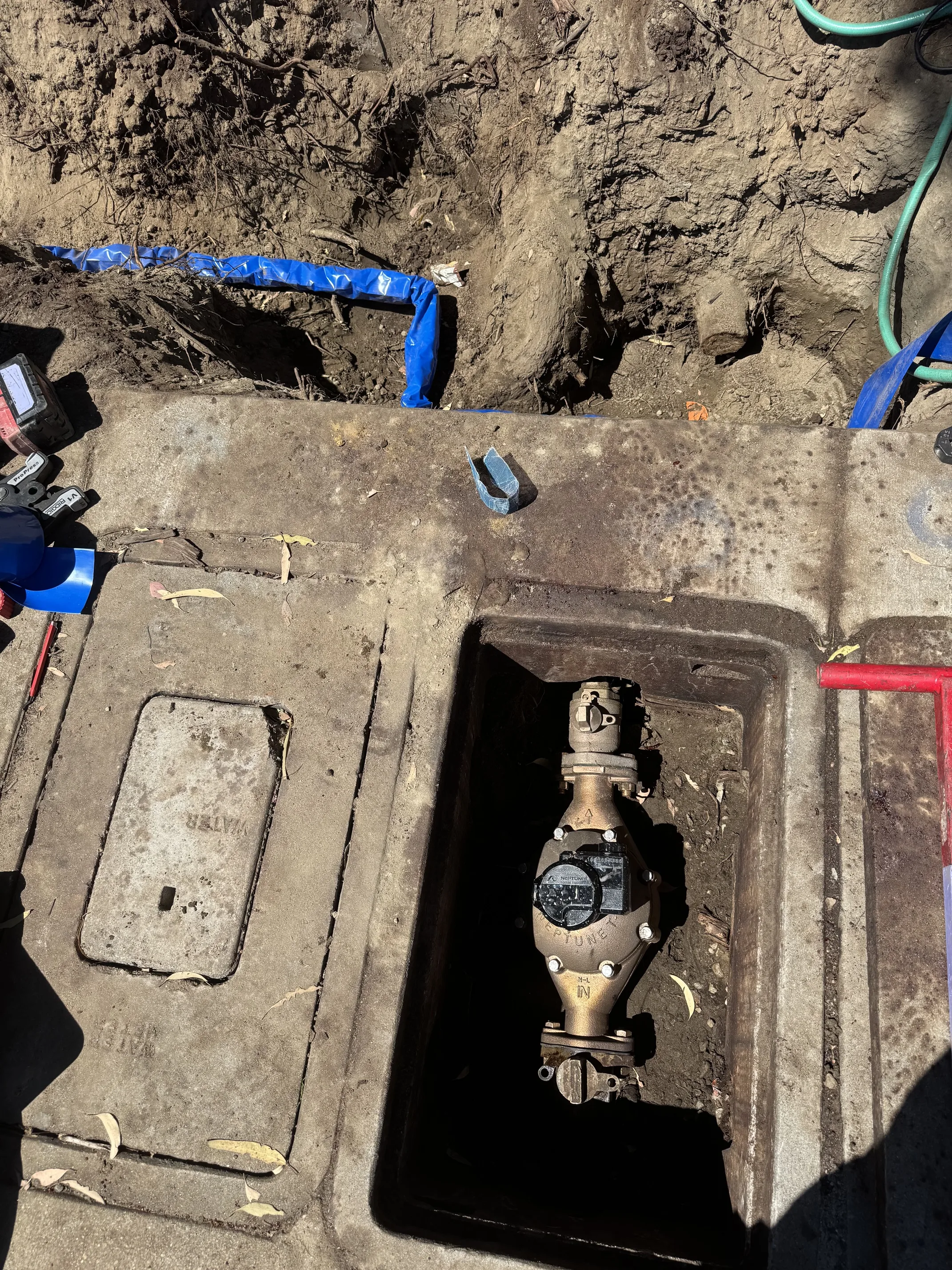
Cycle 1 — The Signal
$150–$400
Excess Water & Sewer Charges
The bill arrives 10–25% higher than expected. A single billing cycle of elevated usage. At this stage, the cost is limited to the water itself and the sewer surcharge calculated from it. A repair at this point typically costs $200–$600 depending on source.
Cycle 2–3 — The Damage Phase
$2,000–$8,000
Water Charges + Property Damage
Two to three more billing cycles of the same elevated usage. The leak has now been running for 60–90 days. Drywall saturation, subfloor damage, mold initiation in concealed wall cavities. The repair bill is no longer just plumbing — it includes remediation and finish restoration.
Cycle 4+ — The Claim
$15,000–$60,000+
Remediation + Business Interruption
The leak becomes visible — ceiling stain, floor buckling, mold report from a tenant. Now you're in emergency response territory. Remediation, tenant relocation, business interruption, and insurance claim. The plumbing repair that would have cost $400 is now a five-figure event.
WHAT TO DO WITH THIS INFORMATION
Four Actions That Turn Your Water Bill Into a Diagnostic Tool.
You don't need monitoring equipment to catch most commercial water waste. You need the last 12 months of water bills and 30 minutes.
Step 1
Build a 12-Month Baseline
- Pull your last 12 billing statements from the water district portal
- Log each cycle's usage in HCF (hundred cubic feet) — not dollars
- Plot the number month over month to see your building's seasonal curve
- Anything outside a 10% band from the same month last year is worth investigating
Step 2
Check for Off-Hours Usage
- Contact your water district and request interval consumption data if available
- Look for overnight or weekend consumption when the building is unoccupied
- Any flow during vacant hours is a leak — the volume tells you how large
- Many SoCal districts now offer online portal access with hourly resolution
Step 3
Walk the Fixtures
- Flush every toilet and watch the fill valve — it should stop within 60 seconds
- Check under every sink for active drips on supply lines and drain connections
- Inspect water heater T&P discharge pipes for signs of active or recent flow
- Walk the irrigation system during a run cycle and check every head
Step 4
Schedule a Professional Assessment
- If your baseline shows an anomaly you can't locate, call for a leak assessment
- A plumber with electronic leak detection equipment can isolate sources you can't see
- Slab leaks, concealed supply line failures, and HVAC makeup waste require professional diagnosis
- The assessment cost is a fraction of one billing cycle of undetected waste
On-Site in 2 Hours. That Is Our Standard.
Commercial emergencies do not wait for business hours. Our Priority 1 (P1) SLA targets a 2-hour response during business hours and a 2-hour dispatch for after-hours crises — across Orange County, LA, Riverside, San Bernardino, and San Diego. One call. We handle the rest.
2-Hour Response — (714) 632-0170