
Repair, Reline, or Replace? A Decision Framework for Aging Sewer Lines.
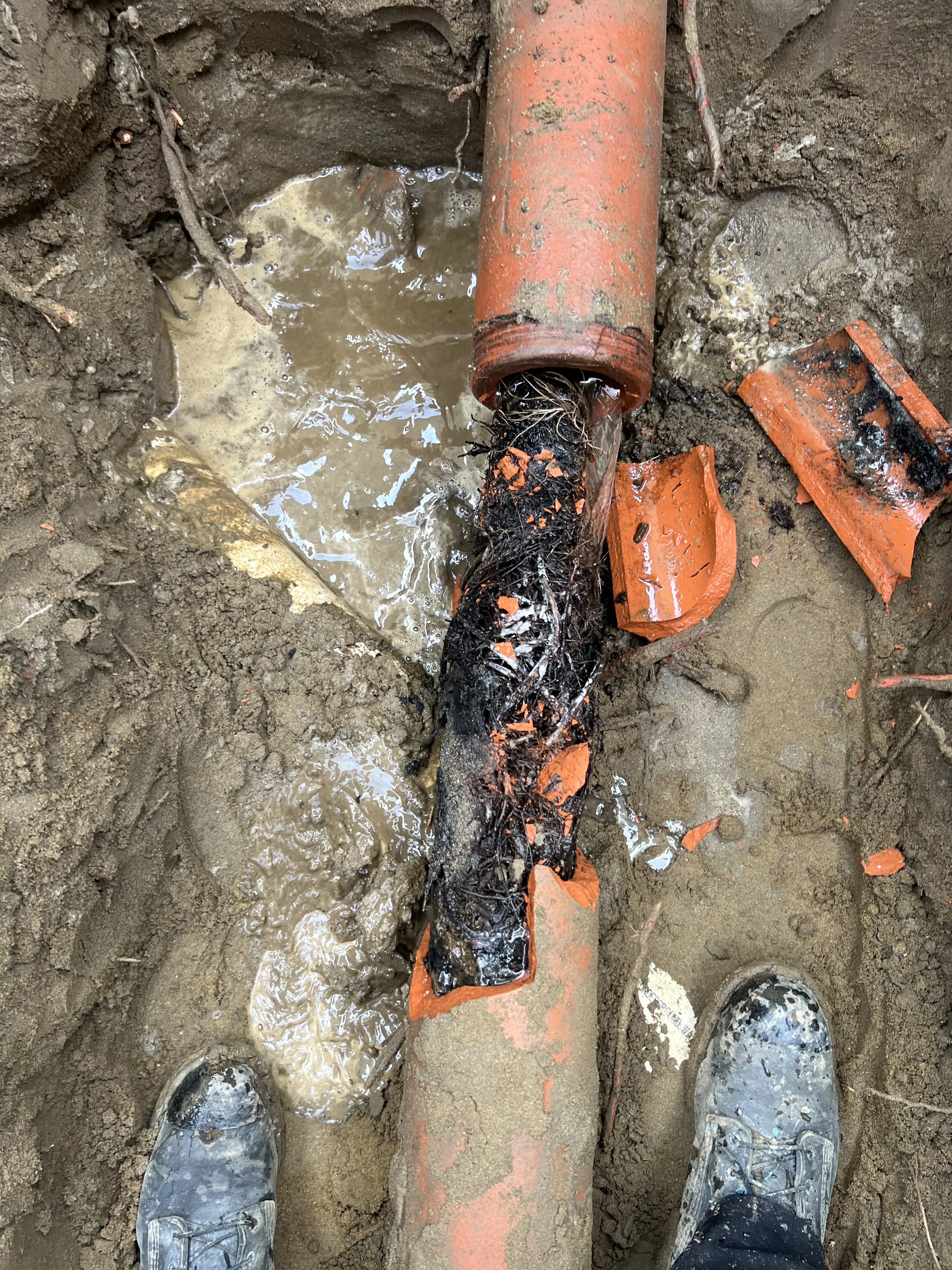
Three options exist when a camera inspection reveals problems in a cast iron sewer system. The right choice depends on three variables: how much of the system is compromised, what the building access conditions are, and how old the system is.
THE DECISION POINT
The Camera Report Is on Your Desk. Now What?
You've had the camera inspection. The technician found graphitization in the horizontal runs, a belly section under Suite 3, and root intrusion at three joint locations. The written report recommends intervention. And you have a decision to make — one that could cost anywhere from $8,000 for a targeted repair to $80,000 for a full system replacement.
The right answer depends on three things: how widespread the damage is, how accessible the pipe runs are, and how old the system is. Get any of those three wrong and you either overbuild — paying for full replacement when relining would have served the building for another 30 years — or underbuild, patching sections of a system that will fail completely within two years.
THE THREE OPTIONS
What Each Intervention Actually Does.
When a camera inspection reveals problems in a cast iron sewer system, the decision comes down to three options — each with different cost profiles, disruption levels, and expected service life. The right choice depends on the scope and nature of the findings.
01
Targeted Repair
Spot Repair of Isolated Sections
When the camera identifies a discrete problem — a single failed joint, a cracked section, a localized collapse — targeted repair opens only the affected area and replaces that segment. The surrounding pipe is left in place.
Best for: Single-point failures in otherwise serviceable cast iron. Systems less than 40 years old with isolated damage. Open-chase access preferred.
02
Trenchless Relining
CIPP — Cured-in-Place Pipe Lining
A resin-saturated flexible liner is inserted through a cleanout and inflated against the existing pipe interior, then cured in place — creating a new smooth pipe within the old one. No demolition. The liner bonds to the interior surface, bridges cracks, seals joints, and eliminates scale.
Reduces interior diameter by approximately ¼ inch. Cannot correct bellied sections. When specific sections can't be lined, sectional replacement at those locations achieves the same result.
Best for: Widespread cracking, joint failure, or scale where structural shape is intact. Slab-on-grade and inaccessible-chase runs where demo cost makes replacement prohibitive.
03
Full Replacement
Complete DWV System Replacement
When camera inspection shows graphitization, bellied sections, and joint failure throughout — not in one area but across the system — targeted repair and lining become uneconomical. Full replacement removes all cast iron and installs new PVC with a 100+ year expected lifespan.
Most cost-effective when camera findings affect more than 40–50% of the system. Significant scope and disruption, but provides a definitive resolution.
Best for: Pre-1970 buildings with systemic graphitization. Properties with multiple recurring backup events. Systems where camera reveals >50% compromise.
THE DECISION FRAMEWORK
Three Dimensions That Determine the Right Intervention.
Walk through each dimension below. The combination of all three determines which of the three options is appropriate for your building.
Dimension One
Failure Scope
What percentage of your system shows camera evidence of failure?
Dimension Two
Building Access
How accessible is the pipe route for physical intervention?
Dimension Three
System Age
Where in its design lifespan is the cast iron?
Based on These Three Dimensions, Your Recommendation Is:
Targeted Repair
Scope <25% · Open access · Age <50 years
Isolated failure, accessible pipe, remaining system in serviceable condition. Spot repair the affected section only.
$8,000–$25,000
CIPP Relining
Scope 25–50% · Any access condition · Structure intact
Widespread surface compromise but structural shape intact. Inaccessible runs where demo cost makes replacement prohibitive.
$15,000–$45,000
Full Replacement
Scope >50% · Age 55+ years · Multiple failure modes
System-wide compromise. Targeting individual sections is uneconomical. Full PVC replacement provides 100+ year service life.
$35,000–$80,000+
COST COMPARISON
What Each Option Costs — and What Drives the Number.
THE FOUR MISTAKES
When Each Option Fails — and Why.
Choosing the wrong intervention doesn't just waste money. It creates a false sense of resolution — and the next failure is worse because everyone assumed it was handled.
Spot-Patching a System-Wide Problem
You've called for targeted repairs at three different locations in five years. Each repair fixed one spot — but the system is failing everywhere. You've spent $40,000 in serial repairs on a system that needed a $65,000 replacement.
Lining a Bellied System
CIPP follows the existing slope. It cannot correct a belly. If the camera shows bellied sections, lining alone is not the answer — the belly must be addressed via sectional replacement at that location before or alongside lining.
Full Replacing When Relining Works
Pre-1970 buildings with hub-and-spigot joints where the structural shape is intact are often candidates for lining. Full replacement in these cases means demolition, tenant disruption, and $30,000+ more than necessary.
Deciding Without a Camera Report
Drain frequency, symptom pattern, and building age are directional. Camera footage is diagnostic. No responsible contractor can accurately scope without visual evidence of what they're dealing with.
On-Site in 2 Hours. That Is Our Standard.
Commercial emergencies do not wait for business hours. Our Priority 1 (P1) SLA targets a 2-hour response during business hours and a 2-hour dispatch for after-hours crises — across Orange County, LA, Riverside, San Bernardino, and San Diego. One call. We handle the rest.
2-Hour Response — (714) 632-0170