Plumbing Pre-Inspection Checklist.
Everything your facilities team should verify before a health department or building department plumbing inspection. Backflow devices, hot water, fixtures, drainage, grease traps, ADA compliance, signage, and documentation — organized as a printable checklist. Built from 62,000+ commercial service calls across Southern California.
Key Takeaways
- Most inspection failures are documentation issues, not equipment issues
- Backflow certification, grease trap manifests, and hot water temp are the three most-flagged items
- Walk the building the day before — check valve access, binder completeness, and fixture operation
- A failed inspection means re-scheduling, re-inspection fees, and weeks of delay
WHY PRE-INSPECTION PREP MATTERS
Most Inspection Failures Are Preventable. Almost All of Them.
A failed plumbing inspection rarely means something is fundamentally wrong with the building. It almost always means something wasn't checked, wasn't documented, or wasn't accessible when the inspector arrived. A backflow tag that expired last month. A T&P valve with no discharge pipe. A grease trap manifest that's sitting in someone's email instead of the binder on the counter.
The fix for most of these items takes 15 minutes. The re-inspection takes two to six weeks and another round of scheduling, fees, and operational disruption. This checklist exists so your team can walk the building before the inspector does, catch the gaps, and show up prepared.
We built this from nearly three decades of pre-inspection walks across Orange County, Los Angeles, Riverside, San Bernardino, and San Diego. These are the items that actually get flagged. Print it, walk it, fix what you find. If something on the list requires a licensed plumber, call us before the inspection — not after.
Do
- Walk the building the day before — check every item on this list
- Stage the documentation binder where the inspector will start
- Clear access to every shutoff valve, cleanout, and mechanical room
- Run hot water and verify temp at the farthest fixture from the heater
Don't
- Assume last year's backflow cert is still current — check the expiration
- Leave grease trap manifests in email — print and file them
- Lock mechanical rooms without leaving a key for the inspector
- Wait until after a failed inspection to call a licensed plumber
Prints on standard 8.5" × 11" paper — multi-page document

Plumbing Pre-Inspection Checklist
Health Dept • Building Dept • Documentation • Day-Of Prep
Items health department inspectors check — food service, sanitation, cross-connection control
Hot Water
Hot Water Temperature at Fixtures
- Verify hot water reaches minimum 120°F at each handwashing station
- Confirm food service fixtures deliver 140°F minimum at the tap
- Check that mixing valves or thermostatic valves are functioning — no scalding risk at public fixtures
- Test water temperature at the fixture farthest from the water heater — this is the one inspectors check first
- Document temperature readings with a probe thermometer, not by feel
Backflow
Backflow Prevention Devices Tested & Tagged
- Confirm annual backflow test has been completed and certification is current
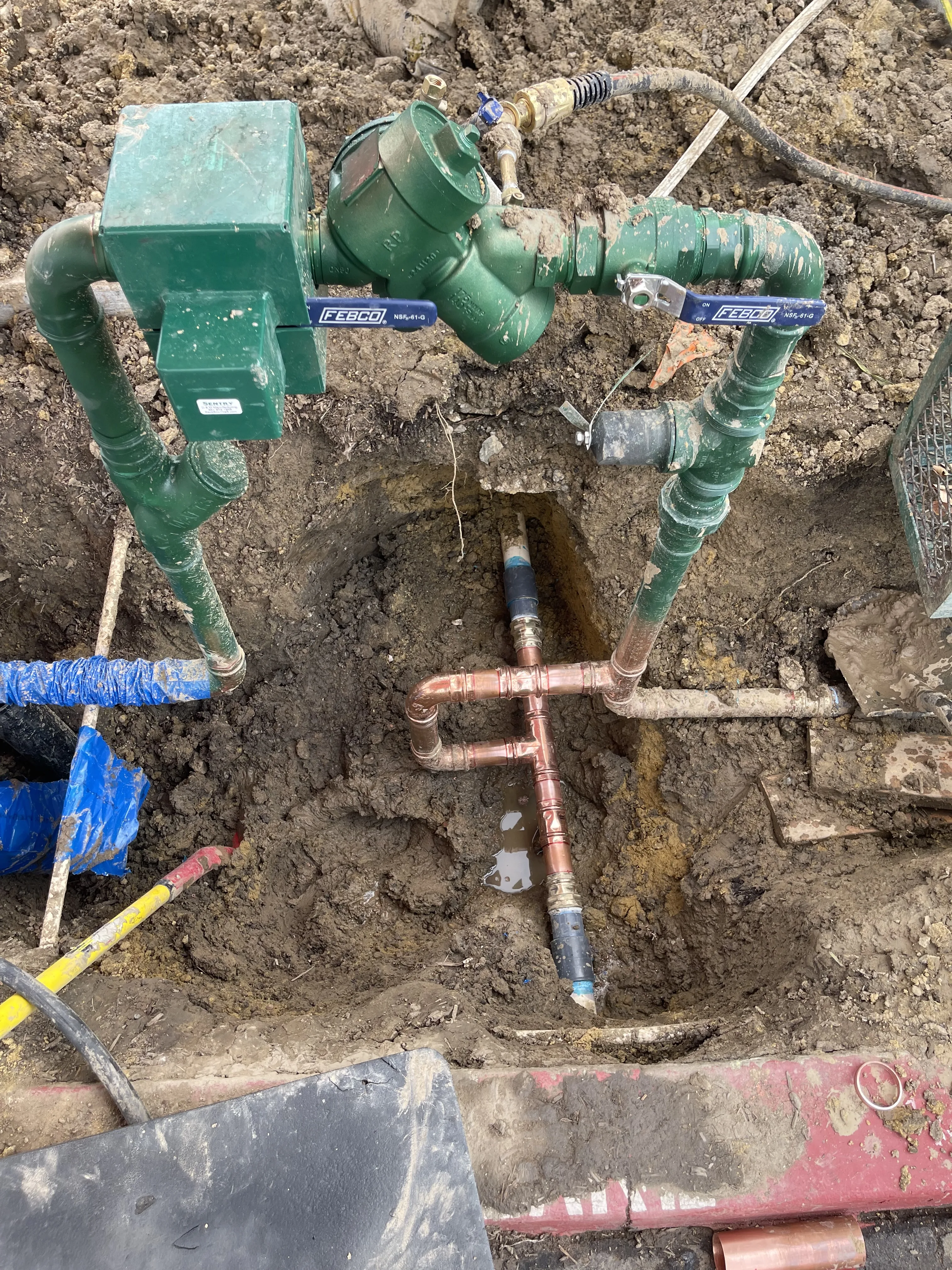
- Verify test tags are physically attached to each assembly (RPZ, DCV, PVB)
- Check that the test report has been filed with the local water district
- Inspect assemblies for visible leaks, corrosion, or missing components
- Confirm no new cross-connections have been added since the last test
Grease Management
Grease Trap / Interceptor Service Records
- Confirm grease trap has been pumped within the required interval (typically 90 days)
- Locate pump-out manifest from licensed hauler — the inspector will ask for it
- Verify FOG (fats, oils, grease) depth is below 25% of trap capacity
- Inspect inlet and outlet baffles for grease bypass or damage
- Confirm trap access cover is in place, sealed, and not obstructed
Sanitation
Handwashing Stations & Signage
- Verify every designated handwashing sink has hot water, soap dispenser, and paper towels
- “Employees Must Wash Hands” signage posted and legible at each station
- Handwashing sinks are not being used for food prep, dish washing, or chemical disposal
- Check that drains at handwashing stations are flowing freely — no standing water in the basin
Floor Drains
Floor Drains Clear & Trap Seals Intact
- Pour water into every floor drain to verify trap seal is intact (prevents sewer gas)
- If trap primers are installed, confirm they are activating and maintaining the water seal
- Check that drain grates are in place — missing grates are an immediate flag
- Verify floor drains in food prep areas are free of debris and food waste
- Inspect for standing water around drains that could indicate a clog or slope issue
Cross-Connection
Cross-Connection Hazards Eliminated
- Confirm air gaps on all indirect waste connections — mop sinks, ice machines, condensate drains
- No garden hoses connected to hose bibs without vacuum breakers
- Chemical dispensing equipment has proper backflow protection
- No submerged inlets on any fixture — faucet outlets must be above the flood rim
Items building inspectors verify — fixtures, valves, water heaters, venting, ADA, gas lines
Fixtures
All Fixtures Operational
- Flush every toilet — verify fill valve stops, no continuous running
- Run every faucet — check for drips, proper hot/cold operation, and aerator flow
- Inspect under-sink connections for active leaks or mineral buildup
- Confirm no fixtures are disconnected, capped off, or abandoned without proper termination
- Verify all fixture supply stops are operational (turn off, turn on, confirm no drip)
Shutoff Valves
Shutoff Valves Accessible & Labeled
- Main building shutoff valve is accessible, labeled, and exercises (turns) properly
- Zone and floor isolation valves are labeled and not buried behind storage or equipment
- Valve tags or labels are legible — replace faded tags before the inspection
- Emergency shutoff location map is posted in the mechanical room or maintenance office
Water Heaters
Water Heater Seismic Strapping, T&P Valve & Expansion Tank
- Seismic strapping in place — two straps, upper third and lower third (California requirement)
- T&P (temperature and pressure) relief valve has a proper discharge pipe routed to within 6" of floor or exterior
- Expansion tank installed on closed-loop systems (required when check valve is present on supply)
- No combustible materials stored within 18" of gas water heater (code clearance requirement)
- Data plate visible and legible — inspector may verify unit age and capacity
Backflow Certification
Annual Test Certification Current
- Pull the most recent backflow test report — confirm certification has not lapsed
- Verify the report was filed with the water district (not just tested, but filed)
- If any device failed and was repaired, confirm the retest report is also on file
- Check device serial numbers on the report match the physical assemblies installed
Gas Lines
Gas Line Pressure Test Records
- Locate most recent gas line pressure test records if applicable
- Inspect exposed gas piping for corrosion, damage, or missing support hangers
- Confirm gas shutoff valve is accessible and labeled at each appliance and at the meter
- Verify flex connectors are current code-approved type (no older, unapproved brass connectors)
- Check that gas appliance venting is intact and properly routed to exterior
ADA Compliance
ADA-Compliant Fixtures Where Required
- Accessible restrooms have proper clearances — 60" turning radius, 18" side clearance at toilet
- Lavatory is wall-mounted or has knee clearance beneath (no vanity cabinet blocking access)
- Under-sink supply and drain pipes are insulated or covered to prevent contact burns
- Faucet handles are lever-type or sensor-operated — no round knobs in accessible restrooms
- Mirror, soap dispenser, and towel dispenser mounted at ADA-compliant heights
DWV System
Proper Venting on All Drain, Waste & Vent
- No gurgling sounds when fixtures drain — gurgling indicates a venting issue
- Vent terminations on roof are unobstructed and extend required height above roof surface
- No sewer odor in any occupied space — check restrooms, mechanical rooms, break rooms
- If recent tenant improvement work was done, confirm new fixtures are properly vented per permit
Permits
Open Permits & Recent Work
- Check for any open plumbing permits that require final inspection sign-off
- If recent work was done (water heater replacement, repipe, TI plumbing), confirm permits were pulled and closed
- Verify no unpermitted modifications are visible — capped lines, relocated fixtures, added gas connections
- Have permit copies available in the inspection binder for reference
Records the inspector may ask for — have these in the binder before they arrive
Test Reports
Backflow Test Reports
- Current annual backflow test report for every assembly on the property
- Water district filing confirmation or receipt (proof the report was submitted)
- Retest reports for any device that failed initial test and was repaired
- Device inventory list with serial numbers, locations, and test due dates
Service Records
Maintenance & Service History
- Grease trap pump-out manifests for the past 12 months (or as required by local code)
- Water heater service records — T&P valve test, anode inspection, flushing
- Drain cleaning service records with dates, locations, and methods used
- Sewer camera inspection reports with condition notes and footage reference
Permits
Permits & As-Built Drawings
- Copies of all plumbing permits pulled in the past 24 months
- Final inspection sign-off for any recently completed permitted work
- As-built drawings showing current plumbing layout (if available)
- Tenant improvement plumbing plans and approvals for recent buildouts
Compliance
Certifications & Compliance Records
- Contractor license verification — C-36 license number and current status
- Water district cross-connection control survey results (if conducted)
- Fire sprinkler or fire suppression isolation valve test records (if applicable)
- Any code violation notices and documentation of corrective action taken
Inspection morning — logistics, access, staff readiness, and the final walk
Access
Mechanical Room & Utility Access
- Unlock all mechanical rooms, water heater closets, and backflow enclosures before the inspector arrives
- Clear any items blocking access to shutoff valves, cleanouts, or water heaters
- Confirm roof access is available if vent terminations need to be checked
- Open grease trap access cover or have the tool and key staged nearby
- If the building has a locked meter room or shared utility space, coordinate access with the landlord or HOA in advance
Staff
Staff Availability & Point of Contact
- Designate one person as the inspector’s point of contact — someone who knows where everything is
- Facilities manager or building engineer should be on site, not just on call
- If a plumber needs to be present, confirm appointment time allows them to arrive before the inspection window
- Notify tenants in advance if the inspector may need access to their space (food service tenants especially)
Documentation
Inspection Binder Ready
- Compile all documents from the documentation checklist above into one physical binder or organized folder
- Include backflow test reports, grease trap manifests, service records, and permit copies
- Add a property plumbing summary page — water heater count, backflow device count, grease trap locations
- Have a blank notepad for recording inspector comments and any correction items issued on site
- If the inspector references a prior violation or open item, have the corrective action documentation ready
Final Walk
30-Minute Pre-Walk Before Inspector Arrives
- Walk the route the inspector will walk — restrooms, kitchen, mechanical room, exterior utilities
- Run hot water at the farthest fixture and spot-check temperature with a probe thermometer
- Flush toilets, run faucets, check for drips or running fixtures one final time
- Verify all signage is in place — handwashing signs, shutoff valve labels, backflow device tags
- Confirm nothing has changed since your pre-inspection prep — no new storage blocking access, no fixtures taken out of service
WHAT INSPECTORS FLAG MOST OFTEN
The 5 Most Common Inspection Failures We See in the Field.
After nearly three decades of pre-inspection walks and post-failure remediation across Southern California, these are the five items that account for the majority of commercial plumbing inspection failures. Every one of them is fixable before the inspector arrives.
01
Expired Backflow Certification
The test was done, but the report wasn't filed with the water district. Or the annual test lapsed by 30 days and nobody noticed. This is the single most common flag across every jurisdiction we work in.
02
Missing T&P Discharge Pipe
The water heater has a T&P relief valve, but the discharge pipe is missing, too short, or terminates into a bucket instead of routing to the floor or exterior. Immediate correction required.
03
Grease Trap Overdue for Service
The 90-day pump interval slipped. The manifest isn't in the binder. FOG depth is above the 25% threshold. Health department inspectors check this on every food-service inspection without exception.
04
Hot Water Below Minimum at Fixture
The water heater is set correctly, but by the time hot water reaches the farthest handwashing station, it's below 120°F. Recirculation issues, failed mixing valves, or undersized units are the usual causes.
05
Inaccessible Shutoff Valves
The main shutoff is behind pallets in the warehouse. Zone valves are buried behind a storage rack someone installed last quarter. Inspectors need to see and sometimes test these — clear the path before they arrive.