
Who Pays for What: Landlord vs. Tenant Plumbing Responsibilities.
The 2 AM emergency call. A drain is backing up, flooding a tenant's kitchen. The tenant calls the landlord. The landlord calls the plumber. The plumber does the work. Then everyone argues about who pays. This guide ends that conversation before it starts.
THE FRAMEWORK
Every Building Eventually Has That Plumbing Conversation. Here's How to Have It Before the Emergency.
Landlord-tenant plumbing disputes are among the most common and most expensive conflicts in commercial property management. They persist because nobody establishes the framework before a problem occurs. The plumbing fails at 2 AM. Everyone scrambles. The repair happens. And then the argument starts.
The answer to "who pays" depends on three things: what the lease says, what actually failed, and why it failed. The challenge is that most leases are vague on plumbing, most failures occur without warning, and cause of failure is often disputed. This guide maps nine common categories and shows how lease type shifts the pattern.
THE GENERAL RULE
Infrastructure Is Landlord. Use Is Tenant. But Reality Is Messier.
The building's structural plumbing systems — mains, risers, underground sewer, shared infrastructure — are the landlord's responsibility. What a tenant does with that infrastructure — how much grease they put into a drain, whether they flush things they shouldn't — is a tenant problem.
The complication: most real-world failures sit between these two poles. A drain stoppage in a food service tenant's suite might be caused by grease accumulation from that tenant's operation. Or it might be caused by a collapsed cast iron line that was failing for a decade before that tenant moved in. The same symptom, opposite responsibility.
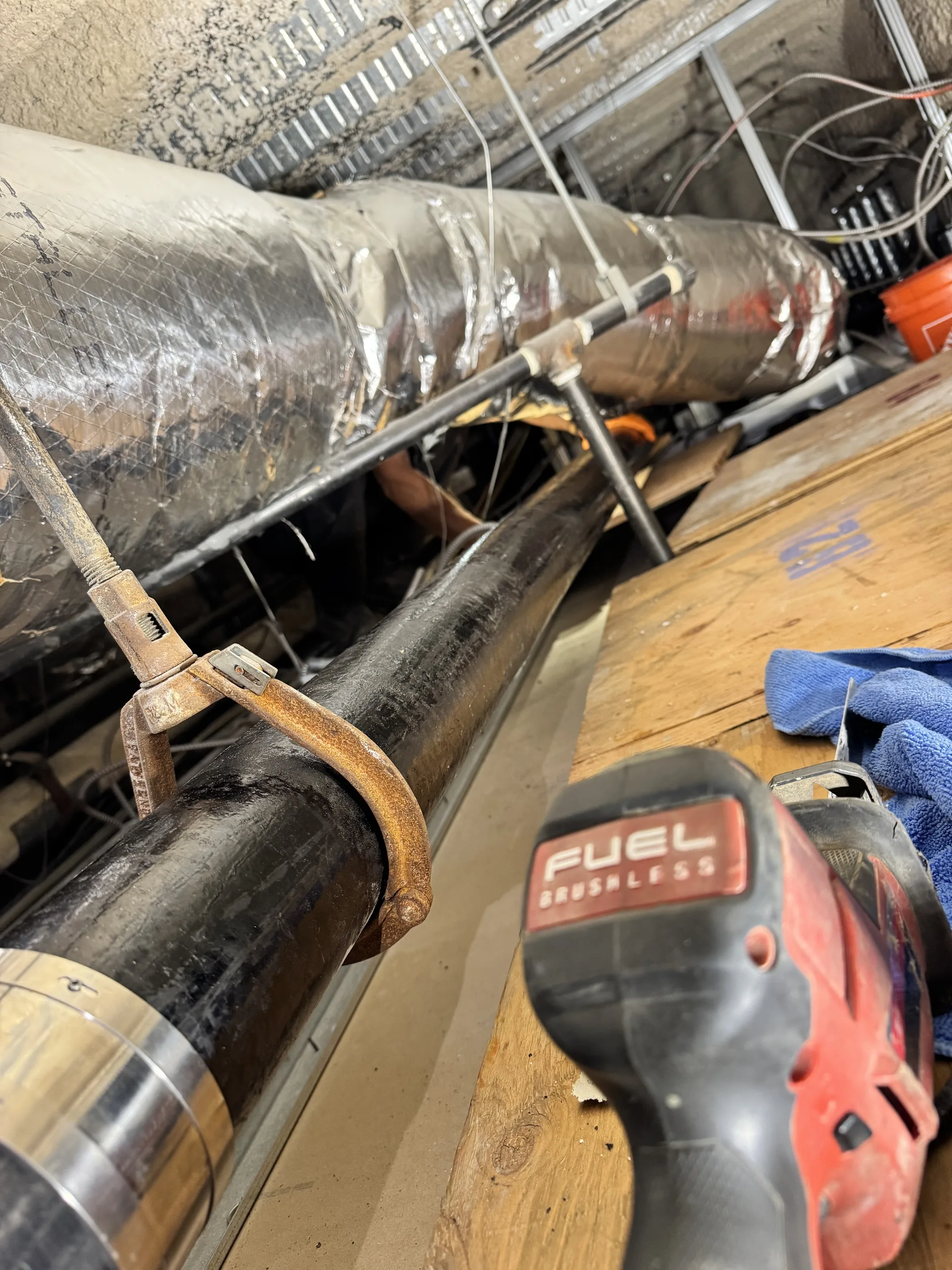
A camera inspection report can typically distinguish between the two. It shows whether the failure is structural (landlord) or usage-based (tenant). This is why camera documentation on service calls over $500 is the single most effective dispute-prevention tool available.
The Quick Split
- Underground sewer mains
- Water supply risers & mains
- Backflow devices (structure)
- Building water heaters
- Shared grease interceptors
- Tenant-installed fixtures
- Under-sink grease traps
- Misuse-caused stoppages
- Tenant-installed equipment
- Suite-specific damage
THE RESPONSIBILITY MATRIX
Who Handles What: A Visual Reference Across Nine Categories.
Each row represents a plumbing category. Each column indicates the responsible party. This matrix reflects general commercial practice in California. Your specific lease language controls.
THE GRAY ZONE
The Four Most-Contested Categories — and How to Resolve Them.
These four categories generate the most landlord-tenant disputes. In each case, the answer depends on what failed, why, and what the lease says.
Suite-Level Drain Lines
After the main tap into the building's infrastructure, who owns the pipe inside the tenant's walls? Most gross leases: landlord. Most NNN leases: tenant. But what about a pre-existing cast iron lateral from 1975 that serves only one tenant and is now graphitized?
This is the most frequently litigated plumbing responsibility category in commercial real estate.
Best practice: Define the demarcation point in the lease. Specify exactly where landlord responsibility ends and tenant responsibility begins — typically at the cleanout or the branch connection to the main.
Drain Stoppages — Cause Unknown
A technician clears a blockage and the invoice arrives. Who pays? If camera shows age-related pipe failure: landlord. If camera shows grease accumulation consistent with tenant's use: tenant. Without camera documentation, disputes escalate to attorneys.
Best practice: Require camera documentation for all drain stoppages over $500. The camera report establishes cause — and cause determines responsibility. Build this requirement into the service agreement.
Grease Trap Maintenance in Multi-Tenant Retail
When a shared underground grease interceptor serves multiple tenants, who funds the pumping? Typically allocated by the lease, but if the lease is silent: landlord defaults. Pro-rated by proportional use is common in NNN scenarios — but requires metering or estimation.
When a tenant use changes — a dry cleaner becomes a restaurant — the grease load on shared infrastructure changes fundamentally. The lease should address this scenario.
Best practice: Include grease trap pumping frequency and cost allocation in every food-service lease. Specify consequences for non-compliance.
Backflow Testing in NNN Properties
California Title 17 requires annual backflow testing. In NNN leases, tenants typically bear all operating costs — but backflow assemblies serve the building's potable water supply, which is infrastructure. Courts have split on this.
Best practice: Specify backflow testing responsibility explicitly in the lease. Regardless of who pays, the landlord should maintain records — the water district holds the property owner responsible for compliance, not the tenant.
THE LEASE VARIABLE
NNN vs. Gross vs. Modified Gross — The Lease Type Rewrites the Entire Matrix.
The lease structure shifts the responsibility pattern fundamentally. NNN tenants bear essentially all maintenance costs including plumbing — the landlord's responsibility narrows to structural failure and capital replacement. Gross tenants pay a fixed rent that includes most operating costs — the landlord absorbs nearly all plumbing expenses. Modified Gross sits between, with a negotiated split.
Percentages are approximate and reflect typical commercial practice. The actual split is determined entirely by your specific lease language. These figures represent the general pattern across property types we service.
WHAT PROTECTS BOTH PARTIES
The Three Documents That Resolve 90% of Plumbing Disputes Before They Become Disputes.
The Lease Addendum
A specific plumbing responsibility schedule added to the lease at execution. Names each category and assigns responsibility. Defines the demarcation point between landlord and tenant pipe. Takes 30 minutes to draft at lease signing. Saves 30 hours of dispute resolution later.
Camera Inspection at Lease Commencement
Baseline documentation of pipe condition at the start of every tenancy. If a drain-related dispute arises during the lease, you have documented what the system looked like before the tenant took occupancy. Cost: $250–$450. Value: priceless in a dispute.
Service Call Documentation
Require a written invoice with cause-of-failure notation on every plumbing service call. "Blockage cleared" is not documentation. "Blockage caused by grease accumulation consistent with food-service tenant use" is. This paper trail determines responsibility.