
In this article, you’re going to look at the basic difference between ABS pipe and PVC pipe. A lot of people are familiar with PVC pipe when it comes to plumbing and similar applications. However, not as many are familiar with ABS and are unsure when ABS is the right choice and when PVC is more suitable.
What Are ABS and PVC Made Of?
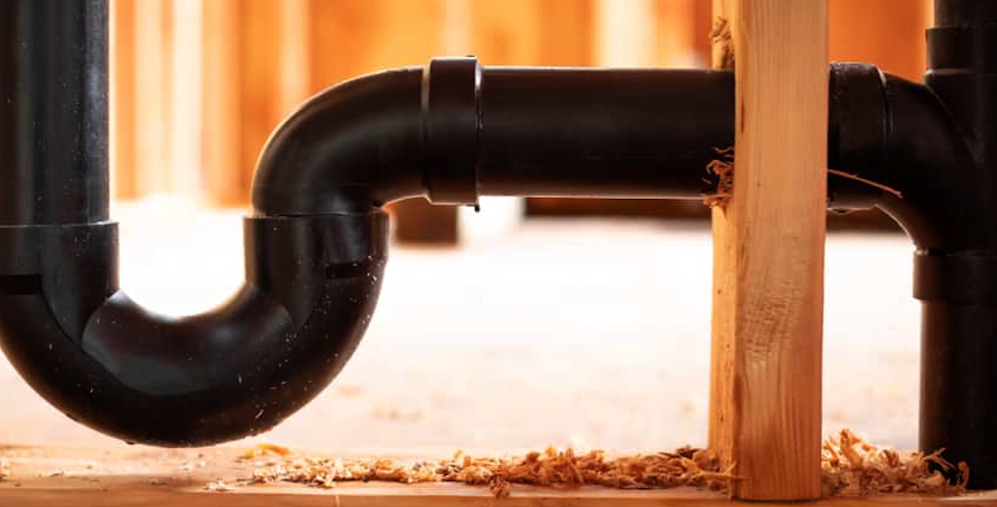
First, let’s look at the materials. ABS (Acrylonitrile butadiene styrene) is always black or a much darker grey color.
On the other hand, PVC, which is short for polyvinyl chloride, is typically white or light-colored.
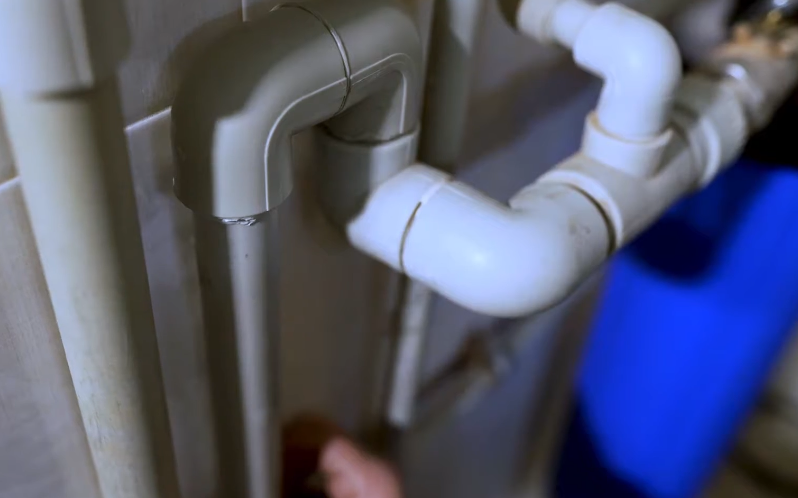
This color difference is one of the easiest ways to identify them.
Is There a Cost Difference Between ABS and PVC?
One of the main differences you’ll notice when looking online at ABS and PVC pipe is the price. ABS pipe is 15% to %20 more expensive than PVC pipe. This is especially true for the actual pipe lengths and the valves. There isn’t as much difference in the fittings, but the pipe lengths and valves are certainly more expensive than PVC.
But the catch is that ABS and PVC pipes are priced close to each other for basic residential plumbing. However, in some markets, ABS can cost slightly more, mainly because of raw material pricing and manufacturing supply.
Local building codes play a big role in cost decisions. Some regions allow only ABS for certain applications, while others prefer PVC. If one type is more commonly used in your area, suppliers stock more of it, which can lower the price. The usual practice is that if a pipe type is less common locally, it may cost more simply because it is not stocked in large quantities.
Availability also affects price. If most contractors in your area use PVC, suppliers buy it in bulk, which usually keeps prices low. Shipping and low stock can make ABS more expensive if it’s harder to find in your area.
Which Is Stronger: ABS or PVC?
Next, consider strength and impact resistance. ABS is tougher and more resistant to impacts, which means it is less likely to crack or break during handling or installation. PVC, while still strong, is more brittle and can crack under extreme force.
This is because of the main temperature ratings difference between ABS pipe and PVC pipe. PVC pipe is suitable for temperatures between 32 degrees and 140 degrees Fahrenheit. Above 140 degrees, it starts to soften, and below 0 degrees, it can become very brittle. Even a slight knock at low temperatures can cause the pipe to crack.
ABS, on the other hand, performs well from about minus 104 degrees Fahrenheit up to plus 158 degrees. There isn’t a huge difference at the higher end, as PVC is rated to 140 degrees and ABS to 158 degrees. However, if you go above 158 degrees, the ABS pipe will also begin to soften and may lose integrity, especially if there is fairly high pressure running through it. The main difference is at the lower end. While PVC only goes down to 32 degrees, ABS goes down to minus 40 degrees.
It is also worth noting that ultraviolet light can degrade ABS, so it is not a good idea to let it be exposed to direct sunlight for long periods. PVC is more resistant to sunlight.
Why is ABS More Impact Resistant than PVC?
ABS is a much more ductile material, which makes it more resistant to impact. If it is impacted, it reforms its original shape very easily instead of cracking like a more brittle material, such as PVC.
Because ABS maintains performance down to minus 40 degrees, it is often the plastic of choice for HVAC, industrial cooling, and mechanical systems. It is also a better option in outdoor areas where temperatures may drop to 32 degrees or close to it, especially where there is a risk of impact. In those situations, ABS provides a more suitable solution.
Is ABS Harder to Fit Than PVC?
Another main difference between the two is installation.
When it comes to flexibility, PVC has the upper hand. It is more flexible than ABS, making it easier to work within tight spaces or complex plumbing layouts. Additionally, PVC has better sound-dampening qualities, which have the potential to lower the noise of water flowing through the pipes. This is great for indoor plumbing.
ABS is actually harder to use in plumbing than PVC.
PVC requires a two-step process. You must prime the pipe ends with a primer, let it dry, and then apply cement. This makes the installation more time-consuming. Then, once you push the fitting onto the pipe, you have a few seconds, maybe four or five, to turn the pipe and adjust it slightly if it is not perfectly straight. You can still make small corrections during that short window.
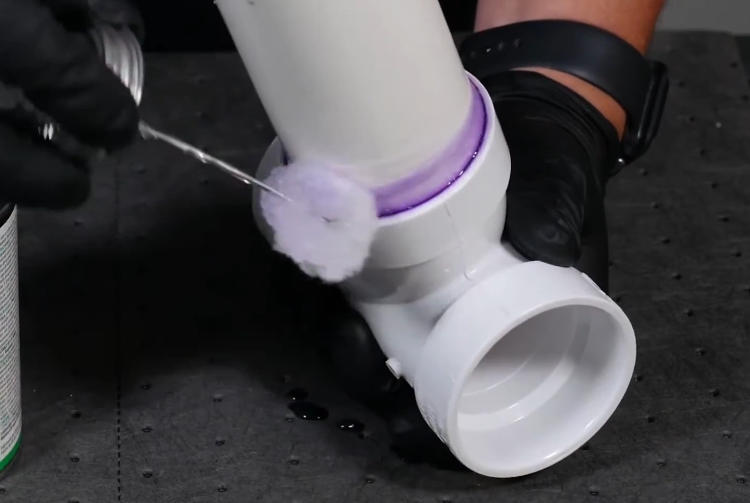
With ABS, the moment the pipe goes into the fitting and reaches the bottom of the socket, it is sealed. You cannot turn it or manoeuvre it at all. It is much less forgiving as a system to install. However, ABS pipes use a one-step bonding process with a special cement, which allows for quicker assembly.
You need to be very careful with ABS. Make sure your pipe is properly marked, everything is ready to go, and all components are aligned before pushing it into the socket. If not, you may run into problems, as it cannot be adjusted once inserted.
Which Is Safe: ABS or PVC?
Both ABS and PVC are used in plumbing. There is a chemical in ABS pipe called bisphenol A (BPA). BPA is a chemical that makes many plastics harder and more durable. There isn’t a lot of clear evidence that BPA is bad for people, but some studies on animals have raised concerns, so some people are wary of it. Because PVC is free of BPA, plumbers and suppliers often use this as a selling point for drinking water systems, where avoiding any possible chemical exposure is very important.
In the plumbing context, BPA in ABS is usually associated with how the plastic is manufactured rather than how the pipe performs in drainage systems. Both ABS and PVC resist water and many common chemicals found in household waste. Neither material corrodes like metal, and both handle wastewater without breaking down.
ABS is often used in underground drainage and sewer lines because in colder regions, these lines are exposed to freezing temps.
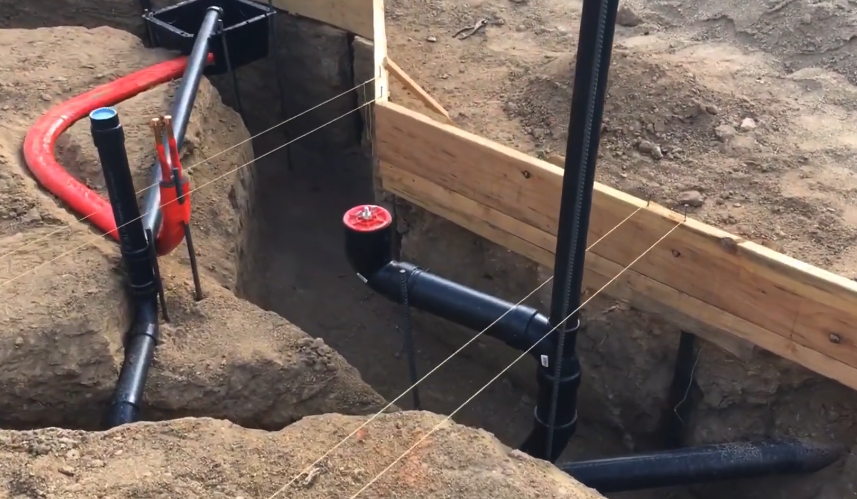
As ABS can handle cold weather a lot better, it does better in these conditions. Also, it does not crack easily if the ground shifts or if there is an impact of some kind. That makes it a practical choice for buried sewer and vent pipes.
On the flip side, PVC is always a good choice for inside buildings, which is why it is used for drain, waste, and vent (DWV) piping. One reason is that it reduces water noise better than ABS, which helps in residential plumbing where sound control matters.
Need a Suggestion?
If you are not sure about what type of plumbing pipe to use when it comes to residential or commercial plumbing, California Coast Plumbers can help. To suggest the best pipe material, our team looks at your specific use, local codes, and performance needs.