
When water shows up on your ceiling, that means it is coming from somewhere above, and it’s traveling until it finds a weak spot to drip through. Ceilings don’t leak because of the ceiling itself. They leak because something above the ceiling failed.
So step one is understanding where the water above is coming from, which can be either something inside the house (plumbing) or something from the top of the house (roof).
Why Would Water Leak Through the Ceiling?
Water always follows the easiest path. It travels along pipes, beams, insulation, and nails until it finds a soft spot on the ceiling and comes out. That’s why sometimes the leak appears far away from the actual problem. Therefore, you need to know where to look, and below are the possible areas.
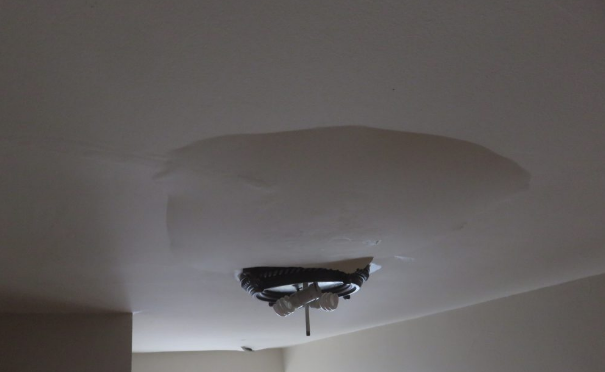
1. Burst or Cracked Water Pipes
If you have water lines running above the ceiling (bathroom, kitchen, laundry room), a cracked pipe will drip constantly. This usually creates:
- Steady dripping
- A growing wet patch
- Water that leaks even when it’s not raining
Plumbing leaks continue 24/7 because the water pressure never stops. This is one of the most common causes in homes.
2. Leaking Bathroom Fixtures (Toilet, Shower, Tub)
Bathrooms are leak factories when something goes wrong.
Here are the parts that commonly fail in the bathroom that is directly above the ceiling:
- Leaking toilet wax ring: Water seeps around the base every time someone flushes.
- Shower drain gasket failure: Water escapes under the shower floor.
- Damaged tiles or grout: Water goes behind the wall, then drops down above the ceiling.
- Overflowing tubs or splashing: Water runs off the edges and travels down through gaps.
Bathroom leaks are sneaky. Sometimes you witness them when someone uses the bathroom, then stop.
3. Roof Problems (Rain-Related Leaks)
If your ceiling drips only during or after rain, then it might be a roof issue.
Common roof problems include:
- Missing or broken shingles
- Cracked flashing around chimneys or vents
- Clogged gutters forcing water under the roof
- Roof valleys letting water pool and find gaps
- Ice dams in colder climates
4. AC Condensation Problems
In case your AC unit (or ductwork) is located in the attic or upper floor, it can cause:
- Overflowing condensation pans
- Clogged AC drain lines
- Sweating ducts dripping on insulation
When you turn on the AC, water starts dripping, which slowly soaks the ceiling.
5. Leaks From Appliance Hoses (Washer, Dishwasher, Water Heater)
If you have a laundry room upstairs or a water heater in the attic, those hoses or connections attached to them can also leak and drain into the ceiling below.
You may only observe leaks when you run the washer, or there can be a steady dripping under the appliance that makes its way to the ceiling, and it looks swollen due to low saturation.
What are the Visible Signs of Water Leaking Through the Ceiling?
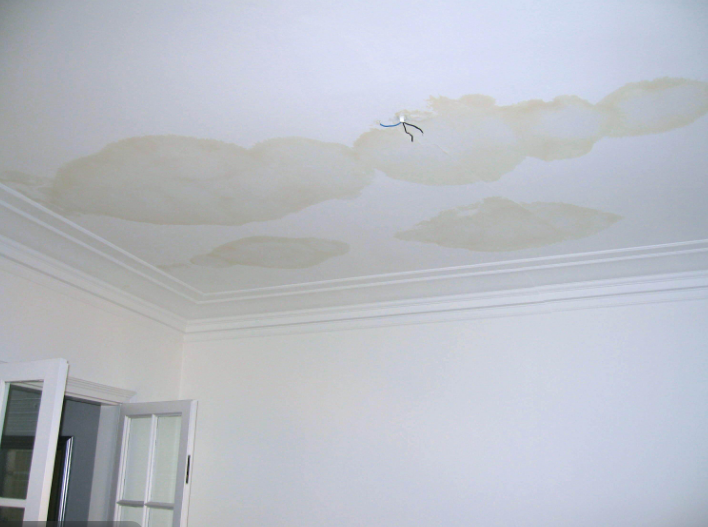
Now let’s talk about the signs, because your ceiling actually tells a story before it collapses due to water leaks:
- Yellow or brown stains: These stains mean water has been there before and dried. It’s not always an active leak, but it’s proof that water has been inside the ceiling.
- Bubbling or Peeling Paint: When the water sits behind the paint, it pushes it outward like a balloon. This is a major warning sign that the drywall is soaked.
- Sagging ceiling: This is serious. It means the ceiling has absorbed so much water that the weight is pulling it down.
- Dripping water: If you actually see droplets falling from a portion of the ceiling, that means the water has punched through the final barrier.
- Musty smell or mold spots: Mold loves dark, wet spaces, so if your ceiling starts to smell like a damp basement, that means water has been trapped there for days.
What to Do Immediately When Water Leaks Through the Ceiling?
A wet ceiling is never a good thing, but you can do a few things yourself to avoid any escalation.
1. Stop the Water From Spreading
When you see water drip through the ceiling, don’t panic. Your first job is to protect your stuff. First, move furniture out of the way, then put down buckets or big bowls under the drips, and next place a towel or plastic sheet on the floor to stop water damage.
Your goal here is not to fix the leak yet. It’s damage control.
2. Try to Reduce the Pressure Inside the Ceiling
Water that is collected above the drywall can turn the ceiling into a giant sponge. If you let it fill up, the whole of it can collapse.
The safe trick you can try here is to find the lowest, softest, bulging part of the ceiling. Then, use a screwdriver to poke a small hole right there, and let the water drain in a controlled way into a bucket.
It sounds weird to poke a hole, but it prevents a way bigger disaster.
3. Shut Off the Water Supply (If It’s a Plumbing Leak)
If the water leaks through the ceiling when the weather is fine, then it’s most likely your plumbing.
Do this:
- Go to where your home’s main water shutoff valve is located.
- Turn it fully off.
- If the leak slows down or stops after a few hours, you know the leak is inside your plumbing line, and this may require the help of a professional.
4. Turn Off Power in That Area
Water + electricity = absolute nightmare.
So if the ceiling is leaking near a light fixture, ceiling fan, or outlet, turn off the breaker for that room from the breaker panel, and try not to touch the wet appliances or fixtures. Remember that you’re doing this to avoid electrical shock or a short circuit that will surely make your life miserable.
5. Start Drying the Area
If you don’t wait for the ceiling to dry on its own, use blower fans or a dehumidifier under the wet area to speed up the process. Also, keep the windows of that room open. This also helps stop mold from forming inside the ceiling.
How to Diagnose What Is Causing the Water Leaking Through the Ceiling?
1. Check Bathroom Fixtures Above the Ceiling
If there is a bathroom directly above the leaking ceiling, see if the floor around the toilet is wet, because that alone can point to trouble. Give the toilet a small push as well; if it wiggles, that usually means the wax ring is failing. Then look at the shower base to inspect if water is collecting or escaping around the edges. Also, check the tiles to make sure none are loose or damaged, and let the water slip underneath.
You should also look under the sink to check dripping pipes. And the biggest sign of all is if the ceiling only leaks when someone uses the bathroom, no matter whether it’s from a shower, a flush, or a sink, then the problem is almost always coming from that bathroom.
2. Look at the Attic or Space Above the Ceiling
If there is an attic above the wet ceiling, grab a flashlight, walk carefully on joists (never on insulation), and look for wet wood, water trails, or shiny spots.
You may see wet insulation, water dripping from AC ducts, or a puddle under a water heater (if installed in the attic), and this will confirm your suspicion.
3. Check the Appliances Above the Ceiling (If Located Above)
You may have installed an AC unit or any appliance like a washer, dishwasher, or water heater directly above the ceiling, and if any of them leaks water, you have a problem.
But the key point here is this: water cannot go straight through solid flooring on its own. For it to show up in your ceiling, something above has to be wrong — a gap around piping, a cracked drain pan, a hole where plumbing passes through, a damaged subfloor, or an opening inside the wall cavity. If you see water directly under one of these units, the leak is coming from the appliance only because it found a way into those spaces, not because water magically soaked through a perfect floor.
4. Check the Roof (If It Only Leaks During Rain)
If the ceiling that leaks is below the roof, check around chimneys, attic vents, at the edges where the gutters are, under damaged shingles, and most importantly, where the roof meets walls. You see cracked surfaces there and hear water dripping in heavy rainfall, and you’ve got your answer.
What Is the Best Solution for Ceiling Leakage?
There are a few small things you can do to fix the water leaking through the ceiling, especially if the problem is right in front of you and doesn’t involve opening walls or cutting pipes. For example, if a sink pipe under the bathroom vanity is dripping, you can tighten the connections or replace the little rubber washer inside.
Same thing with a showerhead or faucet dripping. That’s just a cheap washer or O-ring that you can change. If the toilet has a small leak at the base, and you’re confident enough to lift it, you can replace the wax ring under it. It’s messy but doable. And if your AC drain line is clogged, you can usually clear it with a wet/dry vacuum at the outside drain line.
You can also handle easy things like replacing caulk around a shower or tub if water is sneaking through gaps, and if it’s raining outside and the gutters are overflowing, you can clean those to help stop water from pushing under your roof edges. These are small fixes that don’t involve breaking anything open, and they’re pretty safe for a homeowner to try.
Final Say
Now let’s talk honestly. Once water reaches your ceiling, there’s a very real chance something serious is happening above it. This is where you should step back and treat it as an emergency because the whole structure of your house, electrical wiring, and things you have in there are at high risk. These are jobs for an actual licensed plumber, and the California Coast Plumbers come highly recommended to fix the plumbing side of things that is causing all this mess on your ceiling.
Once the leak is fixed, the ceiling still has:
- Soaked drywall
- Damaged paint
- Possibly mold
- Sagging or soft spots
That part is repaired by a drywall contractor, also called a handyman, or sometimes general home repair workers. They remove the damaged section of the ceiling, dry everything, replace the drywall, and repaint.