
A kitchen sink strainer is that small piece that fits into the sink drain, and most people don’t think about it until it’s missing or clogged. It is made up of several simple parts. The strainer is the metal part that fills the large hole in the sink. The bottom of the strainer has threads that allow you to connect the drain piping to the strainer assembly. The strainer is held tightly against the sink with a large bowl-shaped washer and a nut. There’s also a rubber washer that fits between the washer and the sink.
What Does a Sink Strainer Do?
The sink strainer lets water go down the drain, but catches food scraps, rice, onion peels, or random bits right at the top and stops them from going into the pipes. Once that junk goes down, it doesn’t magically disappear. It sticks inside the drain, builds up with time, and that’s when you start experiencing slow draining, bad smells from the sink drain, or full-on clogs.
In technical terms, it’s basically a perforated screen or mesh with lots of tiny holes that acts like a guard at the entrance, and stops the problem before it even starts. Some people also know the sink strainer by the name strainer basket.
Do I Need a Sink Strainer If I Have a Garbage Disposal?
If you have a garbage disposal, it can grind up food so it can be flushed away, but you still want some form of strainer or splash guard up top.
Why? Well, not all food should ever go into the disposal. Stuff like fat, grease, coffee grounds, rice, pasta, fibrous veggies, anything stringy or greasy can jam or damage the disposal blades or clog the plumbing downstream. Also, the strainer protects the disposal from your mistakes, like those small bottle caps, and that tiny spoon you forgot you left on the sink.
What are the Types of Sink Strainers?
There are usually two common types of sink strainers. A standard one and the basket strainer.
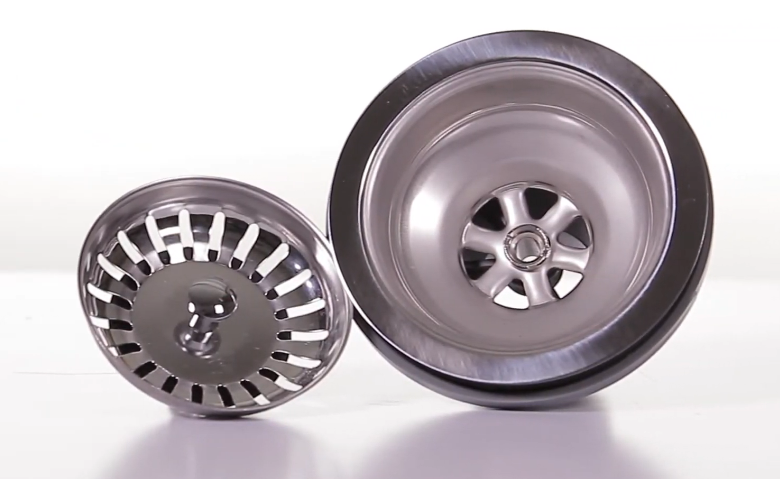
A standard strainer is a shallow metal device that covers the opening of the drain. It allows water to drain into the sink, but it prevents unwanted food scraps from going down and clogging your drain. It also works as a stopper. With a push of a button, you can fill your sink with water and wash or soak your dishes. Standard strainers are a popular option for people who have a garbage disposal.
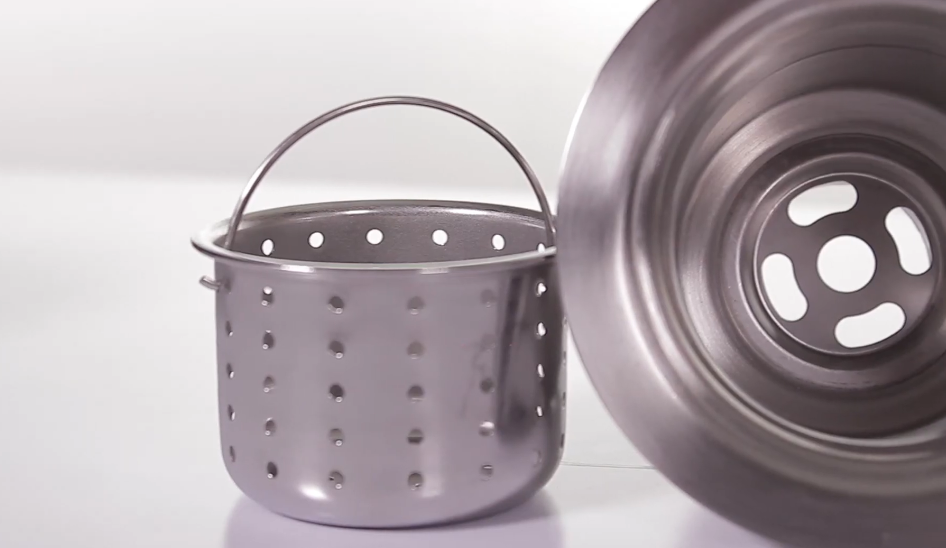
Now, your basket strainer is about three inches deep and features a handle and a lid. The basket is the removable part you put in the strainer to stop water from going down into the drain. It has small perforations, and you can easily remove it from the drain opening by pulling the handle. To plug your sink using your basket strainer, simply place the drain lid over the strainer and press down to get a good seal. The basket strainer is beneficial for folks without a garbage disposal because it collects a large amount of scraps before you need to empty it.
Depending on your needs, each type of strainer is a beneficial one-time investment that will help make food prep hassle-free and keep your sink functioning for years to come.
What Type of Sink Strainer Do I Need?
A sink strainer is not one size fits all. The hole in your sink where water goes down has a specific width and thickness, and the strainer has to match that, or it won’t sit right. Most kitchen sinks come with a pretty standard drain hole size, usually somewhere between about 3.5 inches and 4.5 inches. That’s why most strainers you see in stores are made with that diameter. If you buy one that’s smaller or bigger than your drain opening, it can leak, wobble, or just not seal correctly, which can cause leaks or a total malfunction.
Now, about sink depth. Most sinks have a depth between ⅛ inch and ⅜ inch. With a stainless steel sink, the metal around the drain is thin, so a standard strainer is an obvious choice here. But for heavy ones, like those made from cast iron or other stuff, you’ll need a basket strainer.
How to Clean Your Kitchen Sink Strainer (Step by Step)
If you want to clean your sink strainer, you can do it all by yourself because it’s quite easy.
1. Unscrew the Sink Strainer Basket
The first thing you do is loosen the strainer basket. On some strainers, it just twists. You can use the end of a spoon or a coin to turn it and unlock it. But make sure someone is holding the drain pipe to avoid the mess. Once it’s loose, pull it straight up and out of the drain opening with your hand.
2. Inspect What You’ve Taken Out
This part is kinda gross but normal. Look at the strainer, and you’ll see all the food bits and gunk that got caught.

That’s the whole reason your sink sometimes starts smelling or draining slowly, as the gunk just builds up over time.
3. Remove the Gunk and Rinse
Now here’s the cleaning part. Grab some paper towels and scrape off all the food scraps into the trash. You can throw it in the dishwasher, too, but cleaning by hand is always recommended.
Remember not to flush all that gunk down the kitchen sink; it’s already trapped for a reason. Once the bulk of it is gone, run the basket under water and rinse it off so it’s clean.
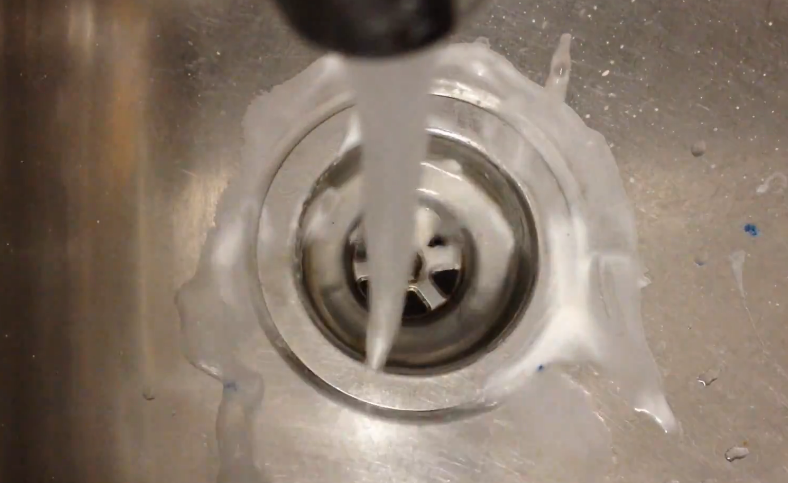
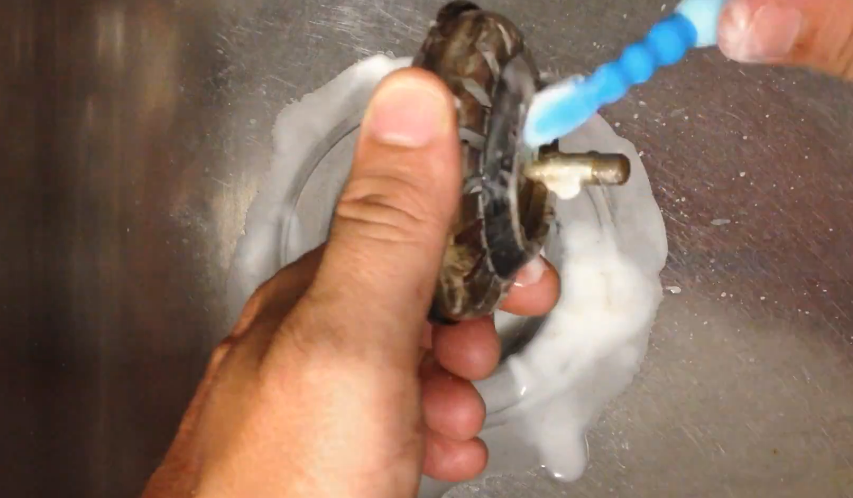
You can also spray vinegar or pour baking soda on it with water afterward, let it sit for about 15 minutes, rinse it off, and use a toothbrush to make it squeaky clean.
4. Put It Back Together
Now it is time to stick the basket strainer back into the drain. Screw or twist it back into place so it’s secure. Then give the whole sink a good rinse.
Can You Replace the Sink Strainer?
If your sink strainer has no stopper or is leaking down below, it is possible to replace it with a new one yourself. However, it can be a bit technical. You need to work underneath the sink for detaching and attaching the strainer. You also have to deal with plumber’s putty, washers, and threaded connections, along with using tools you may not already have. If you want to avoid the hassle or the possible installation mistakes, the best option is to contact a local plumber to do the kitchen sink strainer replacement for you.
Conclusion
To wrap this up, you’ve gone through what a sink strainer is, what it does, and why it matters for your kitchen drain. You’ve also seen the different types of sink strainers and how standard stainless steel options differ from basket-style ones. On top of that, you now know what to do when a sink strainer gets clogged, and water starts backing up instead of draining down the sink. Once you understand how it all works together, it becomes much easier to decide when a quick clean is enough and when it makes more sense to replace it or call a plumber to sort it out.