
So you might be staring down that clogged kitchen or bathroom sink and wondering if you can just grab your plunger and use it on that. Well, sink clogs are prevalent. These can be from lots of hair trapped in the bathroom sink or a buildup of grease and food in the kitchen sink. But before you start plunging like you’re taking on a toilet clog, let’s get practical about whether it is possible to do so, how to do it, and when you should call someone who deals with this stuff every day.
Is It Okay to Use a Plunger on a Sink?
You might be like many homeowners who make the mistake of thinking plungers are just for toilets, but you are wrong. You can use a plunger on a sink, and in a lot of situations, it’s one of the best first moves you can make when water won’t drain.
However, you need to remember that if you use a plunger on a sink, it isn’t a magical fix that works for every clog every time. Plunging is very effective on minor blockages that are due to the collection of grease, soap residue, and food particles. These are the kinds of things that catch in the P-trap or just below the drain opening. If the clog is deeper in the pipe or it is very stubborn, caused by something solid and stuck far down the line, plunging might not clear it. But for 90% of the sink clogs, it’s worth a try before you try out other ways.
A plunger is also very inexpensive and reusable. Rather than immediately using chemical drain cleaners that can damage pipes or cause fumes, a plunger lets you tackle sink clogs with a simple physical action that uses water pressure to dislodge the blockage.
Are there Plungers for Sinks?
Yes, sink plungers are a real thing, and they’re specially made for the job. The classic sink plunger has a simple rubber cup with a flat bottom that sits right over the drain opening.
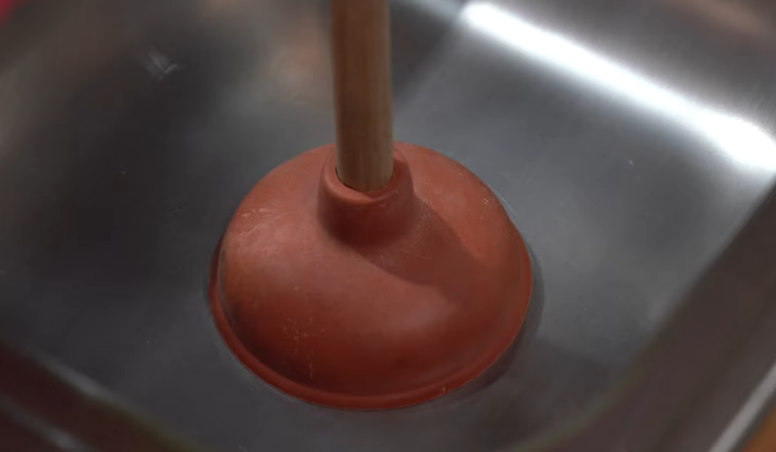
That flat shape does the magic because it lets you press down and pull up without air sneaking in around the edges.
Sink plungers are usually cheaper, easy to store, and work well on bathroom sinks, kitchen sinks, and tubs, because those drains sit flat against the basin. You can even use them on shower floor drains. When the seal is tight, you get real push and pull in the pipe, which helps knock loose the everyday junk that builds up down there, like soap residue, food scraps, or grease.
If you never bought one specifically for sinks, it’s worth buying one. They’re simple tools, and having at least one around the house can save you a trip from a plumber.
Is There a Difference Between a Toilet and a Sink Plunger?
Absolutely. While you may think that all plungers are the same, they’re not. There is a real difference, and using the wrong one can make plunging the sink a lot harder than it needs to be. There are two main designs you should know about:
Sink Plunger (Cup Plunger)
A sink plunger has a flat rubber cup. That shape helps it sit flush over flat drain openings, which is exactly what you are dealing with on your sink. That makes it easier to form a tight suction, and you can then plunge to loosen the clog in the pipe.
Toilet Plunger (Flange Plunger)
A toilet plunger is different. It has a rubber flap, an extra lip at the bottom, and this extension perfectly fits inside the curved drain of a toilet bowl for maximum grip for plunging.
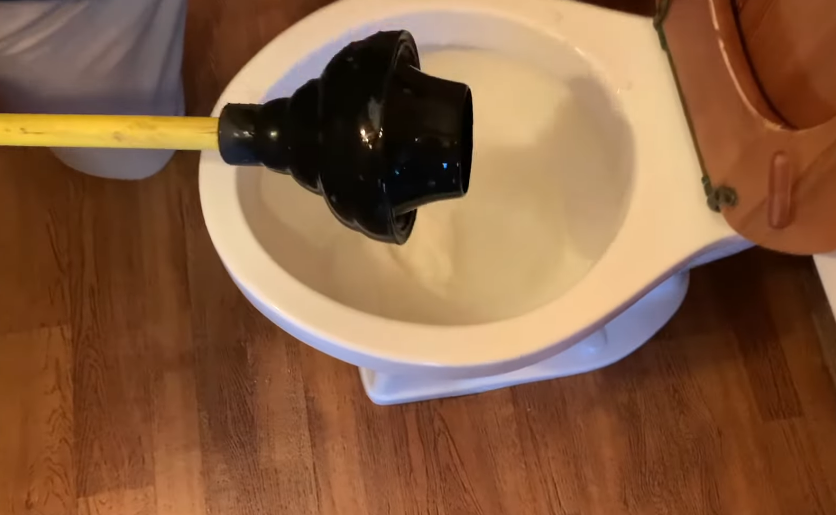
You can fold the flange up and use a toilet plunger to unclog your sink if you have nothing else on hand, but it’s not that good of a deal. Worse, using the same plunger you regularly use for toilets on your kitchen sink risks contamination if it isn’t sanitized first. That feeling of disgust would always be there.
Therefore, it is best to keep separate plungers for toilets and sinks to avoid hygiene problems.
How do You Unblock a Sink with a Plunger?
When you’re ready to tackle that clog, here’s how to use a plunger on a sink the right way.
Step 1. Choose the Right Plunger
First, be sure you have a cup plunger. Then, do some checks. First, run hot water over the rubber cup for a few seconds if it’s too stiff. Then, check the rim of the plunger for cracks because even a small one can let air escape and kill the suction you need.
Step 2. Seal the Overflow and Secondary Drain
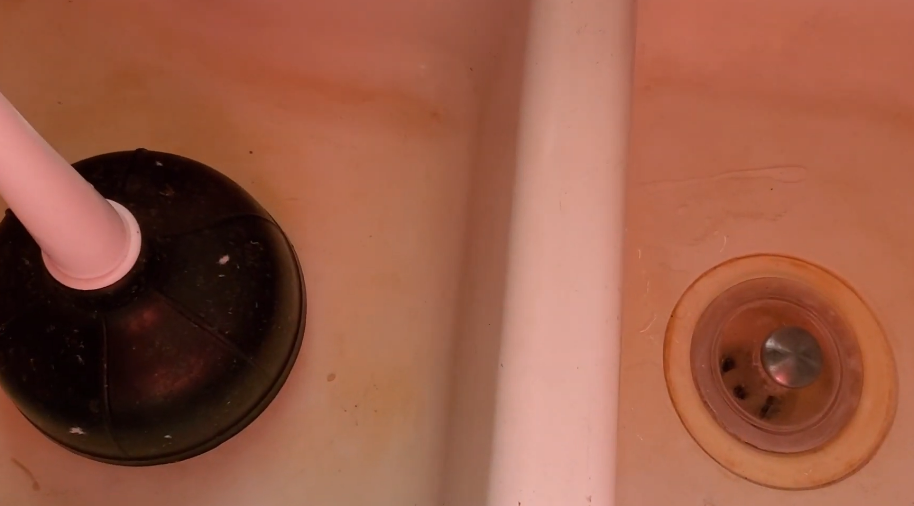
Most sinks have an overflow hole near the top of the basin. Take a wet rag and stuff it tightly into the overflow. This traps the pressure where you want it, and that’s down the drain.
If you happen to have a double sink, block the other drain with a stopper, too.
Step 3. Add Enough Water to the Basin
The pressure you’ll apply with the plunger travels through water far better than through air. When the sink is too dry, the plunger mostly moves air back and forth, and that does nothing to the clog. So, add a few inches of water in the basin to give the plunger something to work against, which helps push pressure directly toward the blockage.
Step 4. Plunge It Away
Now, it’s time to position the plunger directly over the drain opening of the sink. Before you start, make sure the rubber cup fully covers the sink drain so the seal does not break mid-plunge. Once done, push the plunger up & down with force multiple times in a row.
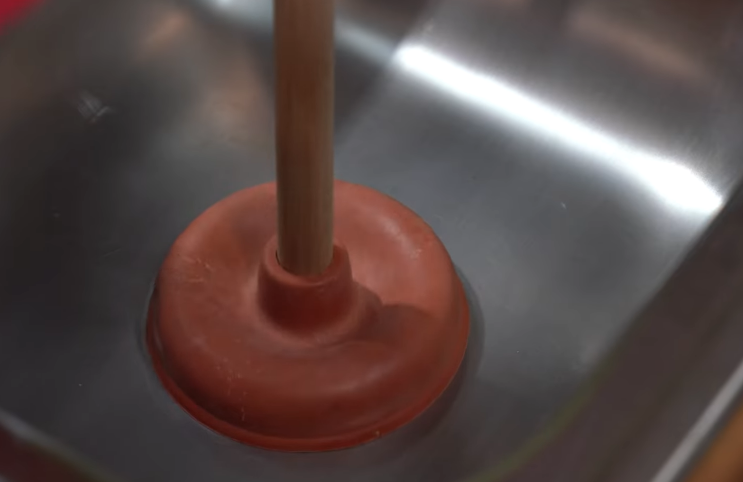
Next, pull the plunger off quickly and see how the water drains. If it’s still slow or stagnant, you may need to repeat the process a few more times. But slow progress can mean you’re making headway. Commit to the process, and plunging will most probably break the clog.
There’s one thing to remember here, and that’s if you’re plunging a kitchen sink with a garbage disposal, you have to be cautious.
Inside that unit, there are rubber seals and connections that keep water where it’s supposed to be. Repeated hard plunging can loosen the rubber connections underneath the sink. That doesn’t mean the disposal breaks instantly, but it can leak later, especially if the unit was already a bit loose.
When to Call a Plumber to Unclog Your Sink?
There are times when the plunger isn’t enough to unclog your bathroom or kitchen sink. If you’ve done the steps (and other DIY stuff you find on the internet) and the sink still won’t clear, that’s a sign of a stubborn clog deeper in the pipes, or there’s another issue at hand.
This is the time you need professional help from a licensed plumber to break up or pull out the blockage. A licensed plumber brings in some tools and the experience to diagnose the real cause, which saves time, money, and frustration.