
The Environmental Protection Agency states that a family of 4 can use upto 400 gallons of water every day. Nearly 70% of it is used indoors, and laundry is a big part of it. Most washing machines consume 50 or more gallons of water per load, and this increases your water usage and the water bill. The good news is that with a few hacks, you can conserve water when washing your clothes.
How to Wash Clothes without Wasting Water?
1. Run Full Loads Instead of Small Ones
Every time your washing machine starts a cycle, it fills the drum with water. It doesn’t matter whether you’ve put in two T-shirts or a full basket of clothes. The machine still uses a significant amount of water for that cycle.
Now think about what happens if you wash small loads all week. On Monday, you wash a few shirts. On Wednesday, you wash some pants, and on Friday, you wash towels. Each time, the machine fills up and drains again. That’s three separate water-heavy cycles.
If you wait until you have enough clothes for one proper load, you’re using that water once instead of three times. However, clothes still need space to move around in the washing machine, so the load should not be so much that it stuffs the drum tightly. But you need to be intentional about not running the machine half empty.
This will reduce how often you run the washing machine. Fewer cycles automatically mean less water used overall.
2. Adjust the Load Size Setting to Match Your Laundry
Now let’s talk about something most people ignore.
If your washing machine has a setting for the load size or water level option, it isn’t there just for decoration. When you choose a specific setting, the washing machine uses that amount of water.
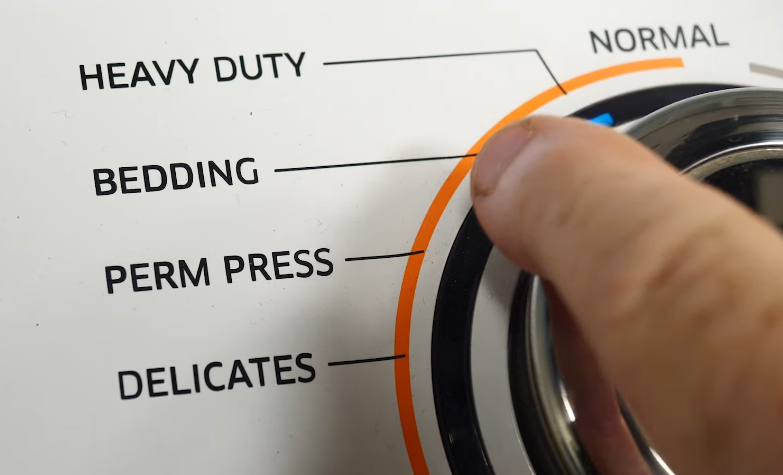
If you’re washing just a few items but the machine is set to large, it will fill up as if you’ve loaded it to the top. That’s unnecessary water.
When you match the water level to the amount of clothes inside the washer, you won’t overfill it, and this helps with conservation.
You won’t notice the difference after one wash, but when you do this regularly, those small adjustments add up because every load that uses slightly less water means lower overall water use across the month.
3. Use the Eco or Economy Cycle When You Can
A lot of people avoid using the eco mode in the washing machine because it takes longer to wash clothes.
But here’s what’s happening behind the scenes.
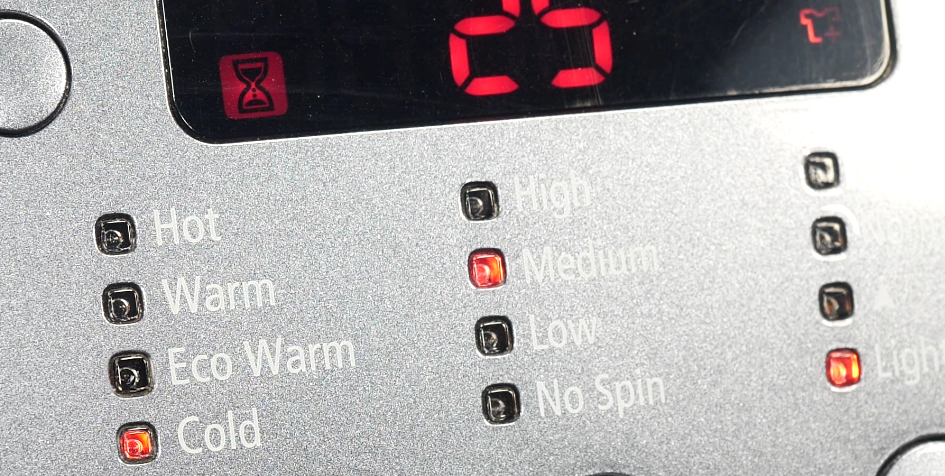
Eco cycles are designed to use less water and less energy by adjusting how the machine agitates and rinses. Instead of aggressively moving clothes around with lots of water, it optimizes the motion and timing. It stretches the process out so it doesn’t need to flood the drum.
If you’re not in a hurry, eco mode is one of the easiest ways to cut down on water use without changing anything else about how you do laundry. You press one different button, and the washing machine handles the rest more efficiently.
4. Skip the Extra Rinse Unless You Truly Need It
There is a setting in the washing machine for an extra rinse. That extra rinse literally means the machine fills the drum with water again just to rinse everything one more time. That is another full water fill and drain.
For most everyday laundry, the standard rinse is enough. Modern detergents are designed to rinse out properly in one cycle. Unless someone in your home has extremely sensitive skin or you’re washing something heavily soiled, that extra rinse is usually unnecessary.
So every time you skip it, you’re skipping an entire additional water cycle. That is a direct water saving right there.
So ask yourself. Do you actually need that extra rinse, or are you just pressing it out of habit?
5. Pre-Treat Stains So You Don’t Have to Rewash
Let me explain why this one matters more than people realize.
Whenever you toss stained clothes into the washing machine without doing anything to the stain, you’re hoping the wash cycle will do the job for you. Sometimes it does. Sometimes it doesn’t.
When it doesn’t, what do you do? You wash it again.
That second wash doubles the water used for that item.
If you would rather apply a little detergent or stain remover directly onto the really dirty clothes, gently rub it in, and let it sit for a few minutes, you increase the chance that the stain comes out in one go out of the washing machine.
Doing laundry this way means the washing machine needs half the water compared to washing twice, and that’s really smart to save money on your water bill.
6. Wash With Cold or Warm Water
Washing machines have a hot water setting, and you might be using it to clean heavily soiled clothes.
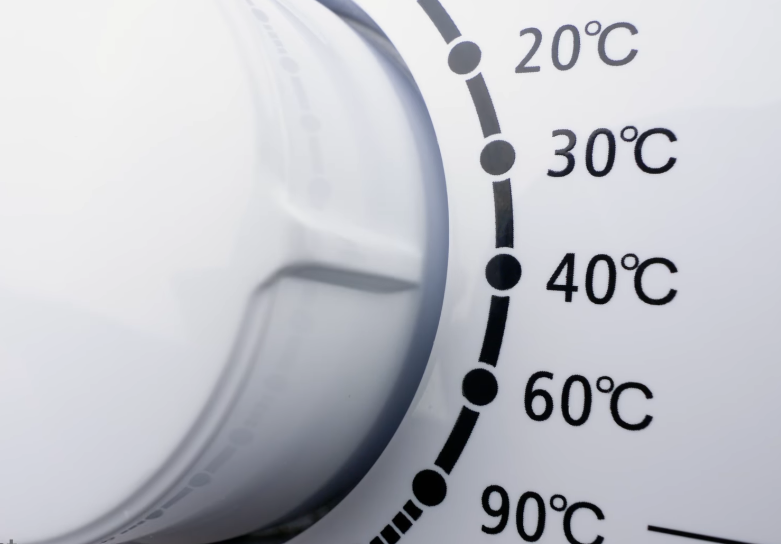
The fact of the matter is that the water does not reach the hot level automatically. There can be two ways:
In most homes, your washer is connected to your home’s water heater. That water heater uses electricity or gas to heat cold water and store it in a tank. So when you select “hot,” the machine pulls in water that has already been heated using energy. 30°C or 40°C works best here.
In some modern washers, especially certain front-load models, the machine may also have an internal heating element that raises the water temperature further. That also uses electricity.
The U.S. Department of Energy stats reveal that about 75–90% of the energy used by a washing machine goes toward heating the water, not spinning the drum. That means the temperature setting is the biggest factor in energy consumption during laundry.
Now here’s the important part.
Switching to cold water does not usually reduce the number of gallons used per cycle. The washer still fills and drains normally. What it reduces is the energy required to heat the water.
Washing clothes with cold or warm water has become more effective over the years because modern detergents are designed to clean regular dirty clothes well at lower temperatures.
There are also fabric benefits. Cold water reduces:
- Shrinkage in cotton
- Color fading
- Fiber damage over time
Hot water still has a purpose. It’s useful for heavily soiled or greasy clothes or situations where sanitation is necessary. But for laundry, the use of cold or warm water is usually enough.
7. Reuse Towels Instead of Washing After One Use
Let’s be practical for a second.
If you step out of the shower completely clean and dry yourself with a towel, that towel isn’t covered in dirt. It’s just slightly damp, and you hang it outdoors or dry it properly so you can use it the next day. However, many people wash their towels after one use out of habit. That’s not necessary.
If you reuse your towels for a few days like this before washing them, you reduce how often you need to clean them in your washing machine. That can eliminate one or two loads per week, depending on your routine, and this means conserving a lot of water and lowering your bill.
8. Re-Wear Clothes When They’re Still Clean
Now think about how often you do laundry.
If you wore a pair of jeans for a few hours and didn’t sweat or spill anything, they’re probably still clean. Same with sweaters, blouses, and dresses that you wear for a short time. So, not every cloth needs washing after one wear.
By re-wearing clothes that are still fresh, you lower the number of times they need to go into the washer. That reduction directly cuts down water use.
This isn’t about being unhygienic but being realistic. If something isn’t dirty, it doesn’t need to go through a full water cycle for cleaning.